By Dr. Judith Mendez, M.D. | Board-Certified Dermatologist
The Complete Ritual for Dry & Dehydrated Skin: A Science-Backed Guide to Lasting Radiance
If your skin often feels tight after cleansing, appears dull under bright light, or develops fine flaky patches that no amount of moisturizer seems to resolve, you are not alone. Dry and dehydrated skin is among the most common concerns we encounter in clinical dermatology, and yet it remains one of the most widely misunderstood.
Here is the truth that transforms everything: dry skin and dehydrated skin are not the same condition. Dry skin is a skin type—a constitutional tendency toward reduced sebum production, meaning your skin produces less of the natural oils that form a protective barrier on its surface. Dehydrated skin, on the other hand, is a skin condition—a transient state in which the deeper layers of the epidermis lack adequate water content. You can have oily skin that is profoundly dehydrated, or dry skin that is also water-depleted. Many individuals experience both simultaneously, which is why a singular approach rarely yields lasting results.
This guide was developed to give you a complete, medically informed ritual that addresses both oil deficiency and water loss at every level of the skin. Whether you are navigating the natural evolution of your complexion through your thirties, forties, fifties, and beyond, or simply seeking to restore the luminous, supple quality your skin once possessed, this ritual will help you reveal your most radiant self.
Understanding Your Skin at the Cellular Level
The Lipid Barrier: Your Skin’s Invisible Shield
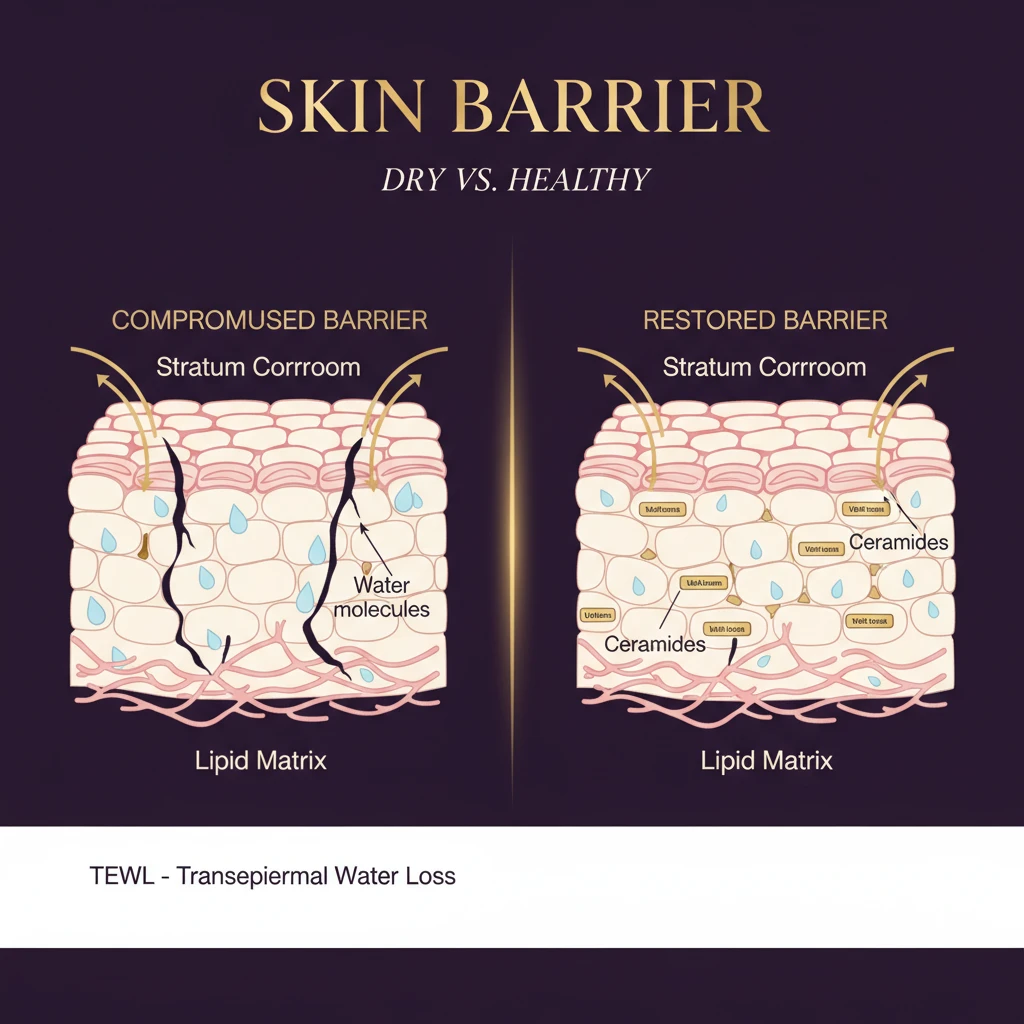
Your outermost layer of skin, the stratum corneum, is often described using the “bricks and mortar” model. The corneocytes (dead skin cells) serve as the bricks, while the intercellular lipids—primarily ceramides, cholesterol, and free fatty acids—act as the mortar that holds everything together. When this lipid matrix is intact, your skin retains moisture beautifully, feels smooth to the touch, and maintains a healthy, luminous appearance.
In dry skin, this mortar is constitutionally thinner. There are fewer ceramides, fewer fatty acids, and the barrier is inherently more porous. The result is a phenomenon dermatologists call transepidermal water loss (TEWL)—the passive evaporation of water from the deeper layers of the skin through the compromised barrier and into the surrounding air. Elevated TEWL is the single most significant measurable indicator of barrier dysfunction, and it is the primary reason dry and dehydrated skin feels perpetually unsatisfied, regardless of how many products you apply.
Reduced Sebum Production and What It Means
Sebaceous glands produce sebum, a complex mixture of triglycerides, wax esters, squalene, and free fatty acids that forms a thin hydrolipidic film on the skin’s surface. This film serves as a first-line defense against moisture evaporation. In individuals with constitutionally dry skin, sebaceous output is measurably lower—sometimes by as much as 40 to 60 percent compared to those with normal or oily skin types. This reduced output means your skin lacks its own natural occlusive layer, making external replenishment not merely beneficial but essential.
How to Identify Dry and Dehydrated Skin
While they often coexist, each condition has distinctive markers:
Signs of dry skin (oil deficiency):
- Persistent tightness, especially after cleansing
- Visible flaking or rough texture, particularly around the nose, cheeks, and jawline
- Fine lines that appear more pronounced than expected for your age
- Skin that rarely feels oily, even by midday
- A matte, sometimes ashy appearance in the absence of skincare products
Signs of dehydrated skin (water deficiency):
- A dull, lackluster complexion that lacks its usual luminosity
- Increased sensitivity or a slight stinging sensation when applying products
- The “pinch test”: gently pinching the skin on the back of your hand—if it takes longer than a second to snap back, dehydration may be a factor
- Dark circles or shadows under the eyes that seem more pronounced
- Makeup that clings to dry patches or separates within hours of application
Common Triggers That Deplete Your Skin
Even with an excellent routine, certain environmental and behavioral factors can accelerate moisture loss:
- Harsh cleansers: Foaming cleansers containing sodium lauryl sulfate (SLS) strip the lipid barrier far more aggressively than most people realize. A single wash with a high-sulfate cleanser can reduce skin surface lipids by up to 30 percent.
- Hot water: While a steaming shower feels wonderful, water above 40 degrees Celsius (104 degrees Fahrenheit) dissolves the protective hydrolipidic film and increases TEWL for hours afterward.
- Cold, dry weather: Low humidity environments—whether from winter air or aggressive air conditioning—create a moisture gradient that pulls water from your skin into the drier surrounding atmosphere.
- Over-exfoliation: Excessive use of chemical or physical exfoliants compromises the stratum corneum before it has time to regenerate, creating a cycle of irritation and dehydration.
- Certain medications: Retinoids, diuretics, and some acne treatments can significantly reduce skin hydration as a side effect.
- Internal dehydration: Inadequate water intake, high caffeine or alcohol consumption, and diets low in essential fatty acids all contribute to skin dehydration from within.
The Morning Ritual: Building Hydration Layer by Layer
Your morning routine is about protection and preparation. The goal is to infuse the skin with water, lock it in with lipids, and shield everything with broad-spectrum sun protection. Each step builds upon the last, creating a layered architecture of hydration that sustains your complexion throughout the day.
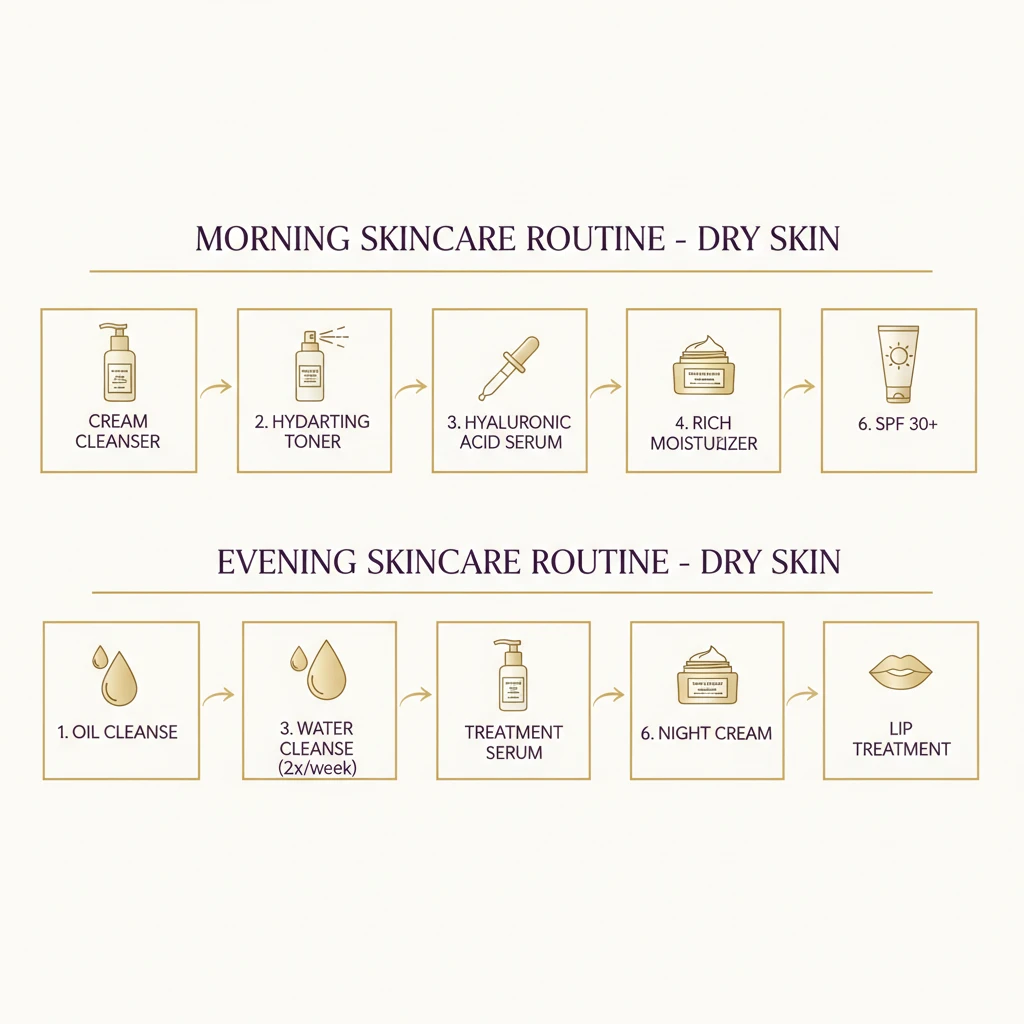
Step 1: Cream or Milky Cleanser
Begin with a gentle, non-foaming cleanser—one formulated without sulfates, which strip the lipid barrier and leave skin feeling taut and vulnerable. Look for cream, milk, or balm textures that cleanse effectively while depositing a thin veil of nourishing lipids on the skin’s surface.
Apply a small amount to damp skin using soft, circular motions. Rinse with lukewarm water—never hot. Your skin should feel clean but never tight or “squeaky.” If it does, your cleanser is too harsh.
Key ingredients to look for: Glycerin, squalane, ceramides, oat extract, sweet almond oil.
Step 2: Hydrating Toner or Essence
Immediately after cleansing—while your skin is still slightly damp—apply a hydrating toner or essence. This is not the astringent toner of decades past. Modern hydrating toners are water-rich formulas designed to flood the skin with humectants, preparing it to absorb everything that follows more effectively.
Pour a generous amount into your palms and press gently into the skin using the “seven-skin method” if desired: applying two to three thin layers of toner in succession, allowing each to absorb for a few seconds before applying the next. This technique dramatically increases the water content of the upper epidermis.
Key ingredients to look for: Hyaluronic acid, beta-glucan, panthenol, rose water, aloe vera.
Step 3: Hyaluronic Acid Serum
This is the cornerstone of your hydration ritual. Hyaluronic acid is a naturally occurring glycosaminoglycan capable of holding up to 1,000 times its molecular weight in water. When applied topically in a well-formulated serum, it draws moisture from the environment and from the deeper dermal layers into the epidermis, creating a visible plumping and smoothing effect.
Apply two to three drops to damp skin and press gently until absorbed. The key is damp skin—hyaluronic acid needs available water to bind to, so applying it to dry skin in a low-humidity environment can paradoxically pull moisture from your own tissue.
Explore our Hyaluronic Acid Serums—formulated with multi-weight hyaluronic acid to hydrate at every level of the epidermis.
Step 4: Eye Cream
The periorbital area is the thinnest, most delicate skin on your face, with fewer sebaceous glands and a reduced capacity for self-hydration. A dedicated eye cream provides targeted nourishment without the heavier textures that can cause milia (tiny cysts) in this sensitive zone.
Using your ring finger—which naturally applies the lightest pressure—gently tap a small amount along the orbital bone, from the inner corner beneath the eye outward, and then along the brow bone. Never drag or pull this tissue.
Key ingredients to look for: Peptides, caffeine, vitamin K, ceramides, squalane.
Step 5: Rich Moisturizer with Ceramides
Your moisturizer serves as the seal—the final lipid layer that locks in all the water and active ingredients you have just applied. For dry and dehydrated skin, choose a rich, cream-based formula containing ceramides, which directly replenish the lipid mortar of your stratum corneum.
Apply a generous amount using upward, pressing motions. Allow one to two minutes for full absorption before proceeding to sunscreen.
We recommend the Cellinol-5 Cream—a deeply nourishing formula designed to restore the skin’s protective barrier while delivering advanced actives for visible renewal.
Step 6: Broad-Spectrum SPF 30+
Sun protection is non-negotiable for every skin type, but it is especially critical for dry and dehydrated skin. UV radiation damages the lipid barrier, accelerates TEWL, degrades hyaluronic acid within the dermis, and compounds every concern you are working to address.
Choose a mineral (zinc oxide and/or titanium dioxide) sunscreen with SPF 30 or higher. Mineral formulas tend to be better tolerated by dry, sensitized skin. Many modern mineral sunscreens have elegant, non-chalky textures that layer beautifully under makeup.
Apply as the final step of your morning ritual, using approximately one-quarter teaspoon for the face and an equal amount for the neck and décolleté.
Browse our Sun Care collection for mineral formulas designed for sensitive, dry skin.
The Evening Ritual: Deep Repair and Overnight Renewal
Your evening routine is where the most profound transformation occurs. While you sleep, your skin enters its peak repair phase—cellular turnover increases, blood flow to the skin rises, and the barrier rebuilds itself. Your PM ritual should support and amplify these natural processes by providing the raw materials your skin needs for overnight renewal.
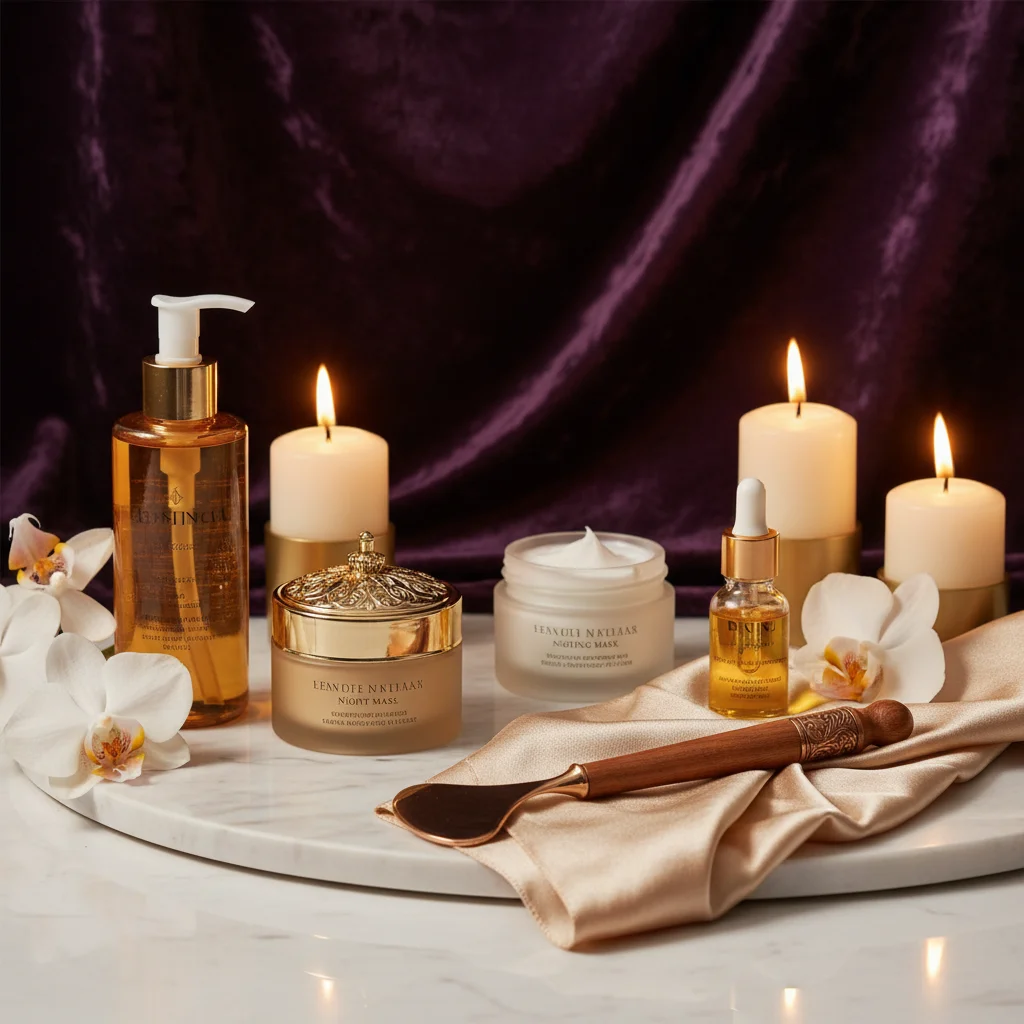
Step 1: Oil Cleanse
Begin with an oil-based cleanser or cleansing balm to dissolve the day’s accumulation of sunscreen, makeup, sebum, and environmental pollutants. The principle of “like dissolves like” means oil-based formulas break down oil-soluble impurities far more effectively—and gently—than water-based cleansers alone.
Massage the oil into dry skin for sixty seconds, allowing it to emulsify with the day’s residue. Add a small amount of warm water to emulsify, then rinse. Your skin should feel soft and nourished, not stripped.
Key ingredients to look for: Jojoba oil, sweet almond oil, grape seed oil, vitamin E.
Step 2: Gentle Water-Based Cleanse
Follow with a gentle water-based cleanser—the same cream or milky formula you use in the morning—to remove any remaining residue. This double-cleansing method ensures a thoroughly clean canvas without the aggressive stripping that a single harsh cleanser would require.
Keep this step brief. Thirty seconds of gentle massage is sufficient. Rinse with lukewarm water and pat—never rub—with a soft towel, leaving the skin slightly damp for the next step.
Step 3: Chemical Exfoliant (2 Times Per Week)
Exfoliation is essential for dry skin, though it may seem counterintuitive. Dead skin cells accumulate more readily on dry complexions because the natural desquamation process is impaired. Without regular, gentle exfoliation, these cells build up, creating a dull, rough surface that prevents your hydrating products from penetrating effectively.
The key is choosing the right exfoliant. For dry and dehydrated skin, lactic acid is the gold standard. As an alpha-hydroxy acid (AHA) derived from milk, lactic acid exfoliates gently while simultaneously functioning as a humectant, drawing water into the skin as it works. Start with a concentration of 5 to 10 percent, applied two evenings per week.
Apply to clean, dry skin. Allow the product to absorb for two to three minutes, then proceed with your remaining steps. Do not rinse. On nights when you exfoliate, skip any other active treatments (retinoids, vitamin C) to prevent over-stimulation.
Discover our Masks & Exfoliators for gentle, hydrating exfoliation options.
Step 4: Treatment Serum for Overnight Repair
On non-exfoliation nights, this is the moment for your most potent treatment serum. The evening hours are when active ingredients can work uninterrupted by UV exposure, environmental aggressors, or makeup.
We recommend the Cellinol-5 Serum—an advanced treatment formulated to support the skin’s natural overnight renewal processes. Its concentrated active complex works in concert with your body’s circadian repair cycle, helping to visibly refine texture, restore suppleness, and reveal a more luminous morning complexion.
Apply three to four drops to clean skin, pressing gently to encourage absorption. Allow one to two minutes before applying eye cream and night cream.
Step 5: Eye Cream
Apply your evening eye cream using the same gentle tapping technique as your morning application. In the evening, you may opt for a slightly richer formula or one containing retinaldehyde (a gentler retinoid derivative) if you are addressing fine lines and crepiness around the eyes.
The Aniise Anti-Aging Eye treatments offer targeted nourishment formulated specifically for the delicate periorbital area, delivering visible firming and brightening benefits over time.
Step 6: Night Cream or Sleeping Mask
Your night cream is the most occlusive step in your entire routine—a rich, emollient formula that creates a protective seal over all the active layers beneath. For dry and dehydrated skin, choose a night cream that contains both humectants (to continue drawing moisture) and occlusives (to prevent its escape).
On nights when your skin feels particularly parched, substitute your regular night cream with a sleeping mask: a thicker, gel-cream hybrid designed to be worn overnight and rinsed away in the morning. Sleeping masks typically contain higher concentrations of humectants and form a more substantial moisture barrier.
Apply generously, using gentle upward strokes. Extend to the neck and décolleté, areas that are often neglected but equally prone to dryness and moisture loss.
Explore our Rich Moisturizers for deeply nourishing overnight formulas.
Step 7: Lip Treatment
The lips lack sebaceous glands entirely, making them uniquely vulnerable to dehydration. A dedicated overnight lip treatment provides the concentrated nourishment this delicate tissue requires.
Apply a generous layer of lip balm, oil, or overnight lip mask as the final step of your evening ritual. Look for formulas containing lanolin, shea butter, vitamin E, and hyaluronic acid. You should wake with visibly softer, smoother lips.
Your Weekly Treatment Schedule
Consistency is the foundation of skin transformation. This weekly schedule ensures you receive the full spectrum of treatments—hydration, exfoliation, nourishment, and repair—without overwhelming your skin at any point.
| Day | Morning | Evening | Special Treatment |
|---|---|---|---|
| Monday | Full AM Routine (Steps 1–6) | Full PM Routine (Steps 1–2, 4–7) | Hydrating sheet mask before Step 4 |
| Tuesday | Full AM Routine | Full PM Routine (Steps 1–2, 4–7) | — |
| Wednesday | Full AM Routine | Full PM Routine with Exfoliation (Steps 1–3, 6–7) | Lactic acid exfoliant (skip treatment serum) |
| Thursday | Full AM Routine | Full PM Routine (Steps 1–2, 4–7) | — |
| Friday | Full AM Routine | Full PM Routine (Steps 1–2, 4–7) | Sheet mask + 2–3 drops facial oil mixed into night cream |
| Saturday | Full AM Routine | Full PM Routine with Exfoliation (Steps 1–3, 6–7) | Lactic acid + rich overnight sleeping mask |
| Sunday | Full AM Routine | Full PM Routine (Steps 1–2, 4–7) | Kansa wand facial massage (5 min) + hydrating mask |
Note: Listen to your skin. If it feels irritated on an exfoliation night, skip the treatment and apply a soothing hydrating mask instead. Your skin’s needs fluctuate with hormonal cycles, stress levels, travel, and seasonal changes.
Ingredient Spotlight: The Science Behind Your Ritual
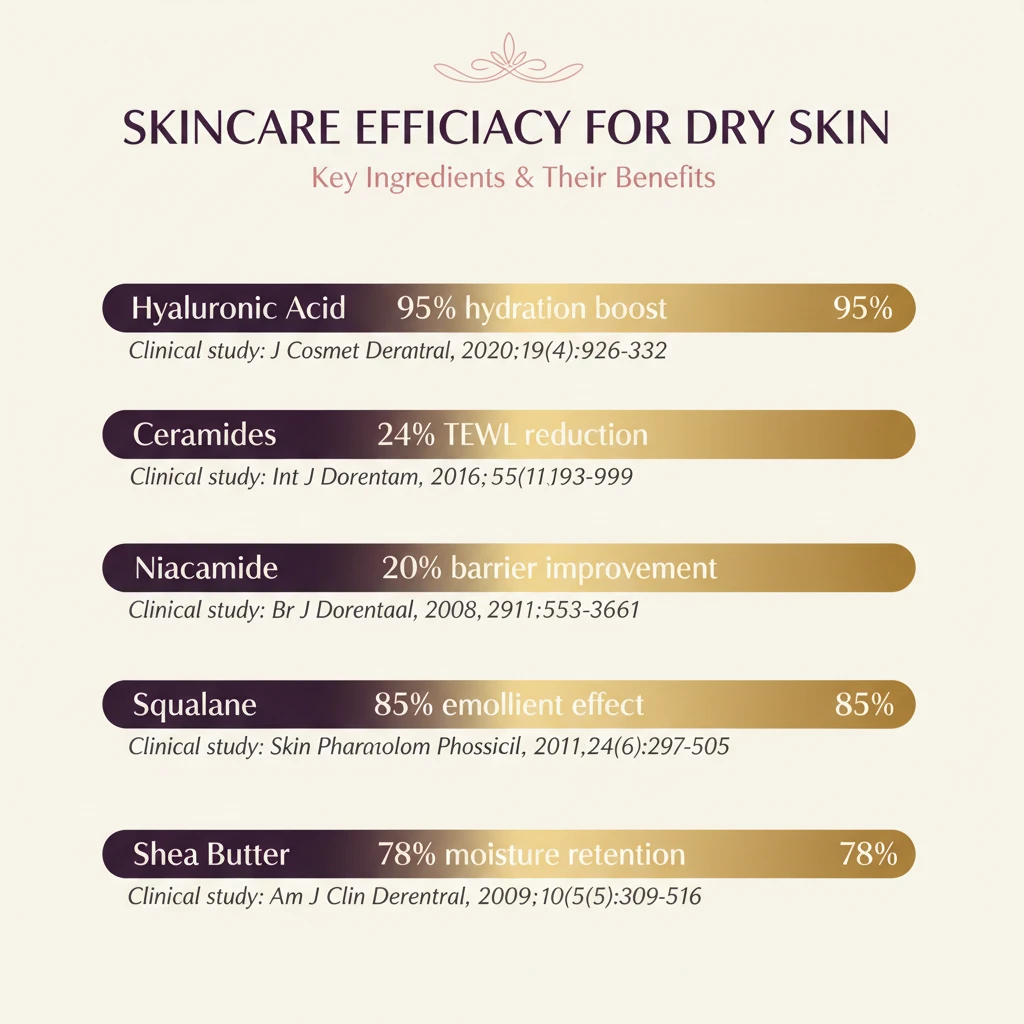
Understanding why certain ingredients work empowers you to make informed choices and adapt your routine with confidence. These five ingredients form the scientific foundation of every effective dry and dehydrated skin ritual.
Hyaluronic Acid
What it does: Hyaluronic acid (HA) is a glycosaminoglycan naturally present in the skin’s extracellular matrix, where it plays a critical role in maintaining tissue hydration and structural integrity. A single gram of hyaluronic acid can bind and retain up to 1,000 grams (one liter) of water, making it the most powerful humectant available in skincare.
The science: Research published in the Journal of Clinical and Aesthetic Dermatology demonstrates that topical application of multi-weight hyaluronic acid (combining low, medium, and high molecular weight forms) significantly improves skin hydration, reduces the appearance of fine lines, and enhances overall skin texture within as few as two weeks of consistent use. Low molecular weight HA penetrates deeper into the epidermis, while high molecular weight HA forms a moisture-retaining film on the surface.
How to use it: Always apply to damp skin. Layer under your moisturizer, never over it. In very dry climates (below 40 percent humidity), pair with an occlusive moisturizer to prevent reverse osmosis.
Ceramides
What they do: Ceramides are the dominant lipid species in the stratum corneum, constituting approximately 50 percent of the intercellular lipid matrix. They are, quite literally, the mortar that holds your skin barrier together. When ceramide levels are depleted—whether through genetics, environmental damage, or the natural evolution of your skin—TEWL increases dramatically and the skin becomes vulnerable to irritation, flaking, and chronic dryness.
The science: Studies in the British Journal of Dermatology have shown that topical ceramide supplementation restores barrier function, reduces TEWL by up to 24 percent, and improves clinical markers of dryness within four weeks. Ceramide-containing moisturizers are now considered a first-line recommendation for dry skin management by dermatological associations worldwide.
How to use them: Look for ceramides (especially ceramide NP, AP, and EOP) in your moisturizer and night cream. They work best in formulas that also contain cholesterol and fatty acids, mimicking the natural ratio found in healthy skin.
Squalane
What it does: Squalane is the hydrogenated, shelf-stable form of squalene—a lipid that your skin produces naturally as a component of sebum. It is a superb emollient that softens and smooths the skin while reinforcing the lipid barrier without clogging pores or leaving a heavy, greasy residue.
The science: Because squalane is bioidentical to a component of human sebum, it integrates seamlessly into the skin’s lipid architecture. Research in Lipids in Health and Disease confirms its exceptional emollient properties, its role in reducing oxidative damage, and its ability to enhance the penetration and efficacy of other active ingredients when used in combination.
How to use it: Squalane can be applied as a standalone facial oil (two to three drops pressed into the skin after serum) or found as an ingredient in moisturizers and serums. It layers beautifully under makeup and is suitable for morning and evening use.
Niacinamide (Vitamin B3)
What it does: Niacinamide is one of the most versatile and well-researched active ingredients in modern dermatology. For dry and dehydrated skin, its primary benefit is its proven ability to strengthen the lipid barrier by stimulating the synthesis of ceramides, cholesterol, and free fatty acids within the stratum corneum.
The science: A landmark study in the Journal of Cosmetic Dermatology demonstrated that topical application of 2 to 5 percent niacinamide reduced TEWL by up to 20 percent and increased stratum corneum thickness after four weeks of use. Additional benefits include improved skin tone evenness, reduced redness, and enhanced overall radiance—making it an ideal multi-functional ingredient for compromised skin.
How to use it: Niacinamide is gentle enough for twice-daily use. It pairs well with hyaluronic acid, ceramides, and peptides. Concentrations between 2 and 5 percent are sufficient for barrier support; higher concentrations (10 percent) target hyperpigmentation but may cause mild flushing in sensitive individuals.
Shea Butter
What it does: Shea butter, derived from the nuts of the African Vitellaria paradoxa tree, is one of nature’s most complete emollients. It is exceptionally rich in oleic acid, stearic acid, linoleic acid, and vitamins A and E, providing deep nourishment and a gentle occlusive layer that prevents moisture escape.
The science: Research in the American Journal of Life Sciences has identified cinnamic acid esters in shea butter that possess anti-inflammatory properties, making it beneficial not only for hydration but also for calming the low-grade inflammation that often accompanies chronic dryness. Its fatty acid profile closely resembles the skin’s own sebum, enhancing compatibility and absorption.
How to use it: Shea butter is most commonly found in rich moisturizers, night creams, body butters, and lip treatments. It is an ideal ingredient for your evening ritual, where its occlusive properties can work overnight without the cosmetic elegance concerns of daytime wear.
Seasonal Adjustments: Adapting Your Ritual Through the Year
Your skin is a living organ that responds dynamically to its environment. A ritual that works beautifully in July may leave your skin parched and flaking in January. Learning to adjust your routine seasonally is one of the most impactful skills you can develop in your skincare journey.
Summer Adjustments (Higher Humidity, Warmer Temperatures)
- Lighter textures: Switch from heavy cream moisturizers to gel-cream or water-cream formulas. Your skin still needs hydration, but the warmer, more humid air provides natural moisture that reduces the need for thick occlusives.
- More hyaluronic acid: Summer humidity means there is abundant atmospheric moisture for hyaluronic acid to bind. This is the season when HA serums perform at their absolute best. Consider adding an extra layer of hydrating toner.
- Humectant focus: Lean into humectant-rich formulas (glycerin, aloe, beta-glucan) that draw and hold moisture. Reserve heavier occlusives for evening use only.
- Diligent SPF: Longer days and more intense UV exposure demand reapplication every two hours during outdoor activity, even on overcast days.
- Misting throughout the day: Keep a hydrating facial mist at your desk or in your handbag. A fine mist of rose water or thermal spring water throughout the day refreshes the skin and provides water for your HA serum to bind.
Winter Adjustments (Lower Humidity, Colder Temperatures)
- Heavier creams: Upgrade to your richest moisturizer. Cold, dry air dramatically increases TEWL, and your skin needs a robust lipid barrier to compensate. Look for formulas with shea butter, squalane, and ceramides.
- Facial oils: Add two to three drops of a nourishing facial oil (rosehip, marula, or argan) mixed into your night cream or applied as a final layer before sleep. This creates an additional occlusive seal.
- Occlusive layering: On especially harsh days, consider “slugging”—applying a thin layer of a balm or petroleum-based product as the final evening step to create a complete occlusive barrier.
- Humidifier: Indoor heating systems can reduce ambient humidity to as low as 15 to 20 percent, well below the 40 to 60 percent range that skin thrives in. A bedroom humidifier running overnight can make a transformative difference.
- Reduce exfoliation frequency: If your skin feels sensitized in winter, reduce chemical exfoliation to once per week instead of twice. Your barrier is already under stress from the environmental conditions.
- Lukewarm showers: The temptation for hot showers intensifies in cold weather, but resist. Keep water temperature at or below 37 degrees Celsius (98.6 degrees Fahrenheit) and limit shower time to ten minutes.
Lifestyle Factors: Supporting Your Skin from Within
No topical routine, regardless of how sophisticated, can fully compensate for internal dehydration and nutritional deficiency. Consider these evidence-based practices as the foundation upon which your external ritual is built:
- Hydration: Aim for a minimum of eight glasses (approximately two liters) of water daily. Herbal teas and water-rich foods (cucumber, watermelon, celery) contribute to your total intake.
- Essential fatty acids: Omega-3 and omega-6 fatty acids are the building blocks of the skin’s lipid barrier. Incorporate fatty fish (salmon, mackerel), walnuts, flaxseed, chia seeds, and avocado into your diet regularly.
- Limit barrier disruptors: Excessive alcohol and caffeine consumption promote diuresis (increased urination), contributing to systemic and cutaneous dehydration.
- Sleep quality: Growth hormone, essential for skin repair, peaks during deep sleep. Aim for seven to nine hours nightly and consider a silk pillowcase, which generates less friction and absorbs less moisture from the skin than cotton.
- Stress management: Chronic stress elevates cortisol, which impairs barrier function and accelerates TEWL. Practices such as meditation, gentle movement, and facial massage with a kansa wand or rose quartz roller serve double duty, calming the nervous system while stimulating circulation to the skin.
When to Seek Professional Guidance
While a well-constructed home ritual addresses the vast majority of dry and dehydrated skin concerns, certain signs warrant a consultation with a board-certified dermatologist:
- Persistent cracking, bleeding, or extreme flaking that does not improve with consistent hydration
- Itching that disrupts sleep or daily activities
- Sudden onset of severe dryness without an identifiable trigger
- Eczematous patches (red, weeping, or crusted areas)
- Dryness that worsens despite a thorough, gentle skincare routine
These may indicate an underlying dermatological condition such as eczema, psoriasis, or contact dermatitis that requires targeted medical treatment.
Complete Your Dry Skin Ritual
Every product in the Regenique Elegance collection has been formulated with the same science-backed principles outlined in this guide. Begin your journey toward lasting hydration and luminous skin.
Download Your Complete Dry Skin Ritual Guide
Save this ritual as a beautifully designed PDF to reference every morning and evening.
Dr. Judith Mendez, M.D., is a board-certified dermatologist specializing in barrier repair and hydration science. She serves as a clinical advisor to Regenique Elegance, ensuring every product and protocol meets the highest standards of dermatological evidence.