The Art of Balance: A Complete Skincare Ritual for Combination Skin
If your skin seems to speak two different languages—oily and insistent across the forehead, nose, and chin, yet tight and parched along the cheeks—you are far from alone. Combination skin is, in fact, the most prevalent skin type worldwide, affecting an estimated 70 percent of the global population at some point in their lives. It is not a flaw to correct; it is an invitation to cultivate a more nuanced, deeply attuned relationship with your complexion.
At Regenique Elegance, we believe that every skin journey deserves a ritual crafted with precision, science, and an unwavering respect for the skin’s own intelligence. Combination skin, with its beautiful complexity, rewards those who listen closely and respond thoughtfully. This comprehensive guide will walk you through a morning-to-evening ritual designed to honor every zone of your face, revealing the luminous, balanced complexion that has always been yours.
Whether you have navigated the frustration of products that quench your cheeks but leave your T-zone slick by noon, or mattifiers that tame shine only to leave dry patches flaking, this tutorial is your roadmap to equilibrium. We will explore the cellular science behind combination skin, build a complete morning and evening ritual, map a weekly treatment schedule, and spotlight the ingredients that bring harmony to every zone.
Understanding Your Skin: The Science of Combination Complexions
What Defines Combination Skin at the Cellular Level
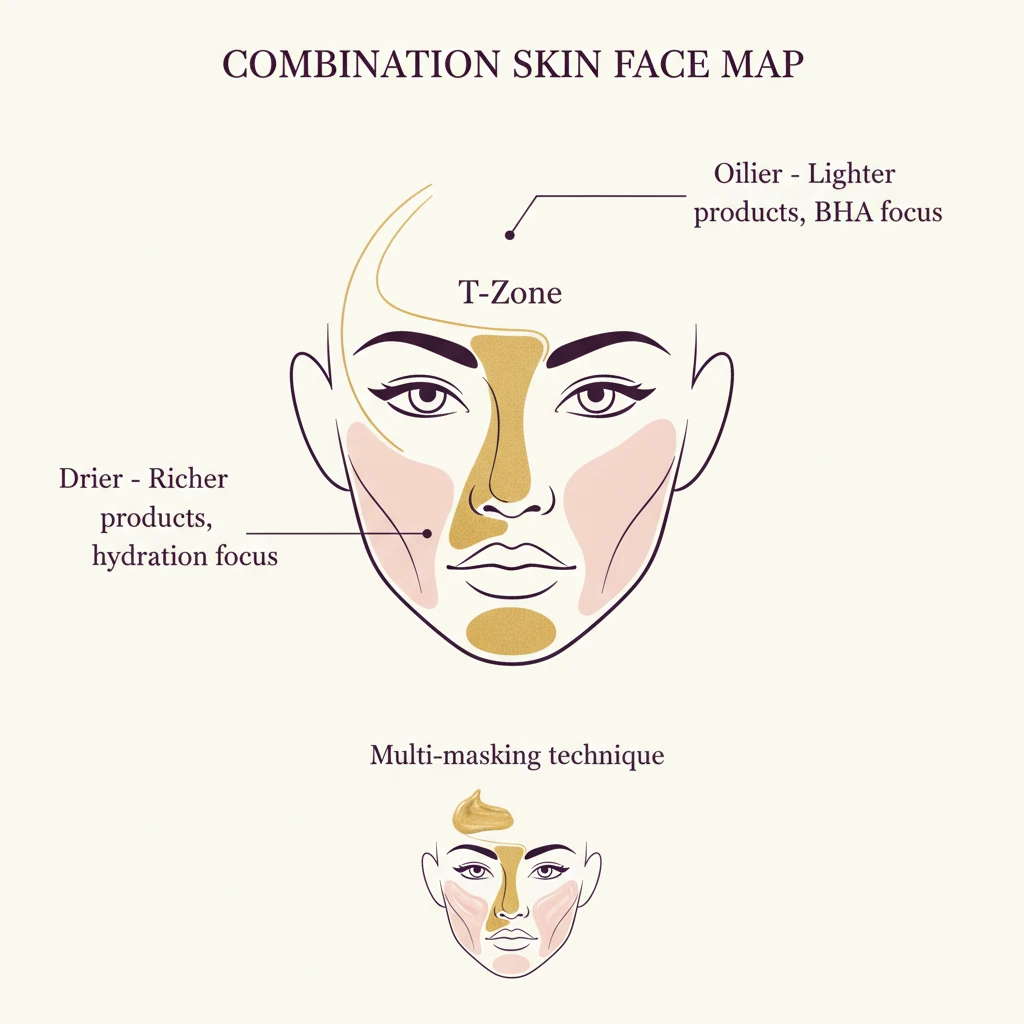
Combination skin arises from an uneven distribution of sebaceous glands across the face. The T-zone—spanning the forehead, nose, and chin—contains a higher concentration of these oil-producing glands, sometimes two to three times the density found on the lateral cheeks. Each sebaceous gland is regulated by androgens and local signaling molecules, which means that oil production in one area of the face can operate almost independently from another.
At the same time, the cheeks often have a thinner stratum corneum (the outermost protective layer of skin) and fewer sebaceous glands, making them more susceptible to transepidermal water loss—the invisible evaporation of moisture from the skin’s surface. This creates the classic combination paradox: excess sebum in some areas and compromised barrier function in others, all on the same face.
Understanding this asymmetry is the foundation of an effective combination skin ritual. Rather than forcing every zone into the same regimen, we embrace a zone-specific approach—treating each area of the face according to its unique needs while maintaining overall harmony.
How to Identify Combination Skin
If you are uncertain whether combination skin describes your complexion, consider the following indicators:
- The T-zone test: By midday, do you notice visible shine or enlarged pores across the forehead, nose, and chin, while the cheeks remain matte or even feel slightly taut?
- Pore variation: Are pores visibly larger along the nose and inner cheeks, yet nearly invisible on the outer cheeks and jawline?
- Product response: Does a single moisturizer feel insufficient on the cheeks but excessive on the forehead? Does a cleanser that controls oil leave your cheeks feeling stripped?
- Seasonal shifts: Does your skin lean oilier in summer and drier on the cheeks in winter, with the T-zone remaining relatively consistent?
If two or more of these resonate, combination skin is very likely your type. Welcome to the majority—and to a ritual designed precisely for you.
Common Triggers That Disrupt Balance
Several factors can exacerbate the imbalance inherent in combination skin:
- The single-product trap: Using one cleanser, one moisturizer, and one treatment across the entire face ignores the fundamental differences between zones. This is the most common misstep.
- Over-cleansing the T-zone: Harsh, stripping cleansers may temporarily reduce oil but trigger a rebound effect, prompting sebaceous glands to produce even more sebum to compensate for lost moisture.
- Neglecting dry zones: Skipping moisturizer on the cheeks to avoid oiliness on the forehead leads to barrier compromise, increased sensitivity, and a dull, uneven texture.
- Hormonal fluctuations: Menstrual cycles, perimenopause, stress-related cortisol shifts, and thyroid changes can all amplify the disparity between oily and dry zones.
- Seasonal transitions: The shift from heated indoor air in winter to humidity in summer demands an adaptive approach, not a static one.
The Morning Ritual: Your AM Combination Skin Routine
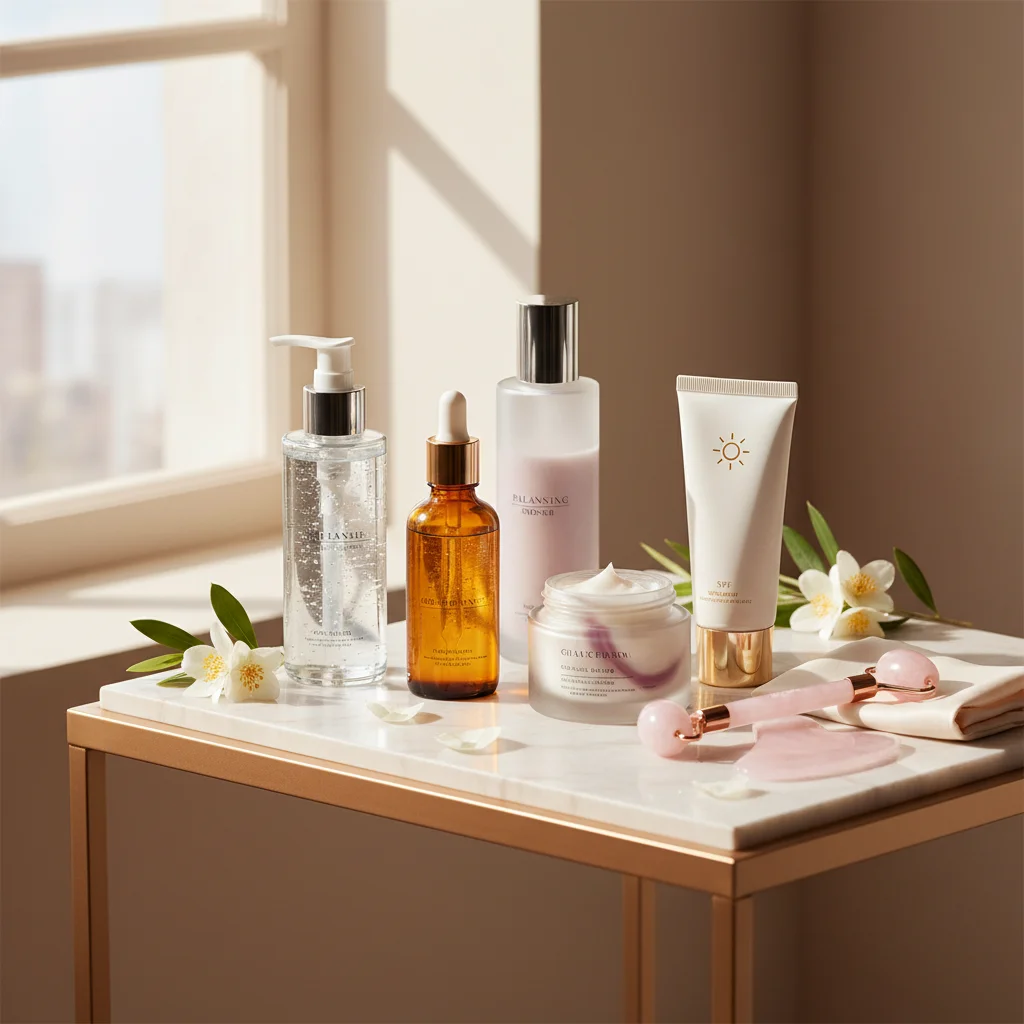
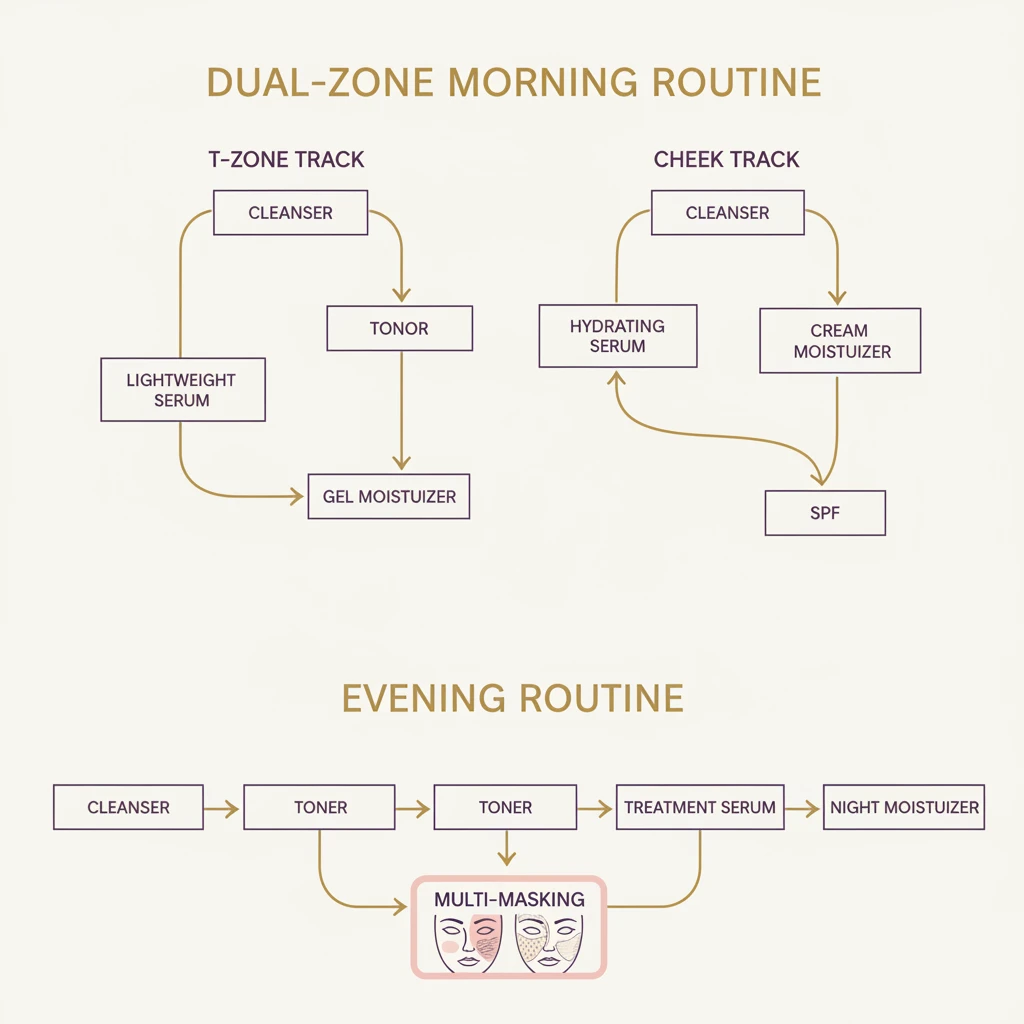
The morning ritual sets the tone for how your skin will perform throughout the day. For combination skin, the goal is threefold: cleanse without disrupting the barrier, deliver targeted hydration and protection, and create a balanced canvas that stays comfortable from morning to evening.
Step 1: Gentle Gel Cleanser
Begin with a pH-balanced gel cleanser (ideally between pH 5.0 and 5.5, which mirrors the skin’s natural acid mantle). A gel texture is ideal for combination skin because it effectively dissolves overnight sebum and impurities in the T-zone without stripping the lipids that protect your drier cheeks.
Look for formulations that contain gentle surfactants such as cocamidopropyl betaine or decyl glucoside rather than sodium lauryl sulfate, which can be overly aggressive. A small amount of salicylic acid (0.5 percent or less) in a morning cleanser can offer gentle pore-clearing benefits without over-drying.
Application: Dampen your face with lukewarm water. Apply a coin-sized amount to your fingertips and massage in gentle circular motions for 30 to 60 seconds, spending slightly longer on the T-zone. Rinse thoroughly and pat—never rub—dry with a clean, soft towel.
Step 2: Balancing Toner
A well-formulated toner bridges the gap between cleansing and treatment, restoring optimal pH and delivering a first layer of hydration. For combination skin, choose an alcohol-free toner that contains humectants such as glycerin or hyaluronic acid alongside gentle balancing actives like niacinamide or witch hazel distillate (not witch hazel extract, which can be astringent).
Avoid toners that list denatured alcohol, ethanol, or isopropyl alcohol in the first five ingredients. These create a temporary matte effect but compromise the moisture barrier, ultimately worsening both oiliness and dryness.
Application: Press a few drops into slightly damp skin with clean palms, or sweep gently with a reusable cotton pad. Allow 30 seconds to absorb before proceeding.
Step 3: Vitamin C Serum
Vitamin C (L-ascorbic acid) is one of the most well-researched actives for all skin types, and it is particularly beneficial for combination skin. It provides potent antioxidant protection against environmental aggressors, supports collagen synthesis, and visibly brightens uneven tone—a common concern for combination complexions where different zones can develop slightly different undertones.
A concentration between 10 and 20 percent is ideal. Pair it with vitamin E and ferulic acid for enhanced stability and efficacy (this combination has been shown to boost photoprotection eightfold).
Recommendation: The Vitamin C Booster Serum from our collection delivers a stabilized 15 percent L-ascorbic acid formula designed to brighten and protect without excess oiliness.
Application: Apply three to four drops to your fingertips and press gently into the face and neck, avoiding the eye area. Allow two minutes to absorb fully before layering the next step.
Step 4: Eye Cream
The periorbital area is the thinnest, most delicate skin on the face, and it lacks the sebaceous glands that keep the T-zone lubricated. Regardless of your overall skin type, this area benefits from dedicated hydration. Choose a lightweight eye cream with peptides (such as palmitoyl tripeptide-1 or acetyl hexapeptide-8) and caffeine to support microcirculation and reduce puffiness.
Application: Dispense a grain-of-rice amount onto your ring finger (which applies the least pressure) and tap gently along the orbital bone, from the inner corner outward. Never drag or pull.
Step 5: Lightweight Gel-Cream Moisturizer
This is where zone-specific awareness becomes critical. A gel-cream hybrid texture is the gold standard for combination skin: it delivers meaningful hydration through humectants and lightweight emollients without the heavy occlusives that can overwhelm the T-zone.
Ingredients to seek include squalane (a lightweight lipid that mimics the skin’s own sebum), ceramides (to reinforce the barrier on drier areas), and hyaluronic acid (to draw and hold moisture). Avoid heavy mineral oil or petrolatum-based formulas, which can feel occlusive on oilier zones.
Pro tip: If your cheeks feel particularly dry, apply a thin additional layer of moisturizer to the outer cheeks only, leaving the T-zone with a single, lighter application.
Step 6: Broad-Spectrum SPF 30+
Non-negotiable, every single day, regardless of season or cloud cover. For combination skin, a lightweight, non-comedogenic sunscreen with a matte or semi-matte finish is ideal. Chemical sunscreens (containing avobenzone, octinoxate, or newer filters like bisoctrizole) tend to sit lighter on the skin than purely mineral formulations, though modern mineral sunscreens have improved dramatically in elegance.
Look for sunscreens labeled “oil-free” or “non-greasy” with a minimum SPF 30 and broad-spectrum UVA/UVB protection. If your T-zone tends toward significant midday shine, consider a mattifying SPF specifically for that area.
Application: Apply a generous half-teaspoon (approximately two finger-lengths) to the face and neck as the final step of your morning ritual. Allow two to three minutes to set before applying makeup.
The Evening Ritual: Your PM Combination Skin Routine
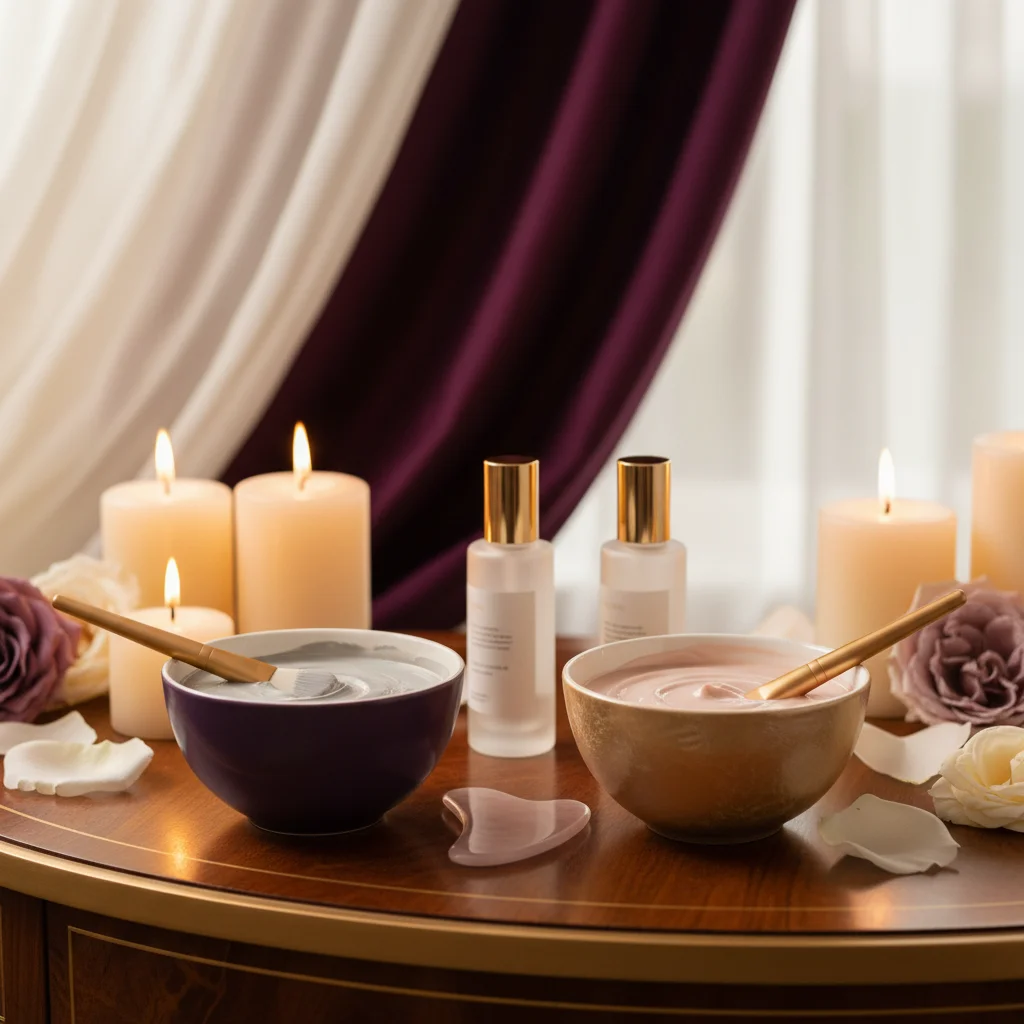
The evening ritual is where transformation happens. While you sleep, cellular turnover accelerates, repair mechanisms activate, and your skin enters its most receptive state. This is the time for deeper cleansing, targeted treatments, and nourishing restoration—tailored, of course, to each zone of your beautiful combination complexion.
Step 1: Oil Cleanse
The first cleanse of the evening dissolves the day: sunscreen, makeup, environmental pollutants, and excess sebum. An oil-based cleanser (or cleansing balm) works on the principle that oil dissolves oil, making it remarkably effective at lifting stubborn impurities without water or friction.
Contrary to what you might expect, oil cleansing does not make combination skin oilier. It actually helps regulate sebum production by gently removing oxidized oils from the T-zone while simultaneously nourishing drier cheeks. Look for formulations based on jojoba oil, grapeseed oil, or squalane that emulsify and rinse clean.
Application: Apply to dry skin and massage in slow, circular motions for 60 to 90 seconds. Add a small amount of lukewarm water to emulsify (the product should turn milky), then rinse thoroughly.
Step 2: Gentle Water-Based Cleanse
The second cleanse ensures that every trace of the oil cleanser, along with any remaining impurities, is removed. Use the same gentle gel cleanser from your morning routine, or opt for a mild micellar water if your skin feels particularly sensitive in the evening.
This double-cleansing method, rooted in Japanese and Korean skincare traditions, is especially valuable for combination skin because it achieves thorough cleansing without the need for a single harsh product.
Step 3: Zone-Specific Exfoliation (2 to 3 Times Per Week)
This is where the art of combination skincare truly shines. Rather than applying one exfoliant uniformly, we treat each zone according to its needs:
- T-zone (oily areas): Apply a BHA (beta hydroxy acid) product, typically salicylic acid at 1 to 2 percent. BHAs are oil-soluble, meaning they can penetrate into pores to dissolve the sebum and dead cells that cause congestion and enlarged pore appearance. Apply with a cotton pad or clean fingertips to the forehead, nose, and chin only.
- Cheeks (dry or normal areas): Apply an AHA (alpha hydroxy acid) such as glycolic acid (5 to 10 percent) or lactic acid (5 to 10 percent). AHAs are water-soluble and work on the skin’s surface, dissolving the bonds between dead cells to reveal smoother, more radiant skin beneath. Lactic acid is particularly gentle and also functions as a humectant, making it ideal for drier zones.
Allow exfoliants to absorb for two to three minutes before proceeding. On non-exfoliation nights, skip directly to Step 4.
Step 4: Hyaluronic Acid Serum
Hyaluronic acid is a universal friend to combination skin. This naturally occurring molecule can hold up to 1,000 times its weight in water, delivering profound hydration without adding oil or heaviness. It plumps and hydrates dry cheeks while providing lightweight moisture to the T-zone without contributing to congestion.
Choose a multi-molecular weight hyaluronic acid serum (containing both high and low molecular weight forms) for hydration at multiple depths within the skin. High molecular weight HA sits on the surface and forms a moisture-binding film, while low molecular weight HA penetrates deeper to hydrate from within.
Recommendation: Explore our curated Balancing Serums collection for formulations designed to harmonize combination complexions.
Application: Apply three to four drops to damp skin (this is essential—hyaluronic acid needs water to bind). Press gently into the face and neck.
Step 5: Eye Cream
Apply the same eye cream from your morning ritual, or switch to a slightly richer formulation for evening if the under-eye area tends toward dryness. Retinol-containing eye creams can be beneficial in the PM, as retinol is photosensitive and best used at night.
Step 6: Night Cream or Multi-Masking
For your nightly moisturizing step, you have two elegant approaches:
Option A – Medium-Weight Night Cream: Choose a night cream that is richer than your morning gel-cream but not excessively heavy. Formulations containing ceramides, peptides, and gentle retinoids (such as retinyl palmitate or bakuchiol, a plant-based retinol alternative) support overnight repair and renewal. Apply a thin layer to the entire face, adding a slightly thicker application on the cheeks if needed.
Option B – Multi-Masking: On treatment nights, embrace the art of multi-masking—applying different products to different zones of the face simultaneously. This technique was designed for combination skin. Apply a lightweight, oil-controlling overnight mask or treatment to the T-zone, and a richer, deeply hydrating mask or cream to the cheeks and jawline. Leave on overnight for a gentle yet targeted treatment.
Step 7: Lip Treatment
The lips lack sebaceous glands entirely and are among the first areas to show dehydration. Complete your evening ritual with a nourishing lip treatment containing ingredients such as shea butter, vitamin E, squalane, or peptides. This small step makes a remarkable difference in maintaining soft, supple lips that complement your newly balanced complexion.
Your Weekly Treatment Schedule
Consistency and variation work hand in hand for combination skin. This weekly schedule balances active treatments with rest days, ensuring your skin receives targeted care without overstimulation.
| Day | Morning Focus | Evening Focus | Special Treatment |
|---|---|---|---|
| Monday | Full AM ritual | Double cleanse + targeted exfoliation | BHA on T-zone + hydrating serum on cheeks |
| Tuesday | Full AM ritual | Double cleanse + basic PM routine | Rest day – gentle hydration only |
| Wednesday | Full AM ritual | Double cleanse + multi-masking | Clay mask on T-zone, hydrating mask on cheeks |
| Thursday | Full AM ritual | Double cleanse + targeted exfoliation | BHA on T-zone + AHA on cheeks |
| Friday | Full AM ritual | Double cleanse + basic PM routine | Rest day – gentle hydration only |
| Saturday | Full AM ritual | Double cleanse + multi-masking + facial massage | Multi-mask + rose quartz facial massage (5 min) |
| Sunday | Gentle cleanse only (skip actives) | Double cleanse + hydrating sheet mask | Gentle recovery day + sheet mask for full-face hydration |
A note on patience: Visible results from a consistent combination skin ritual typically appear within four to six weeks. Skin cell turnover takes approximately 28 days, so give your new routine a full cycle before assessing its effects. Document your progress with weekly photographs taken in the same lighting—the changes will be undeniable.
Ingredient Spotlight: Five Essentials for Combination Skin Harmony
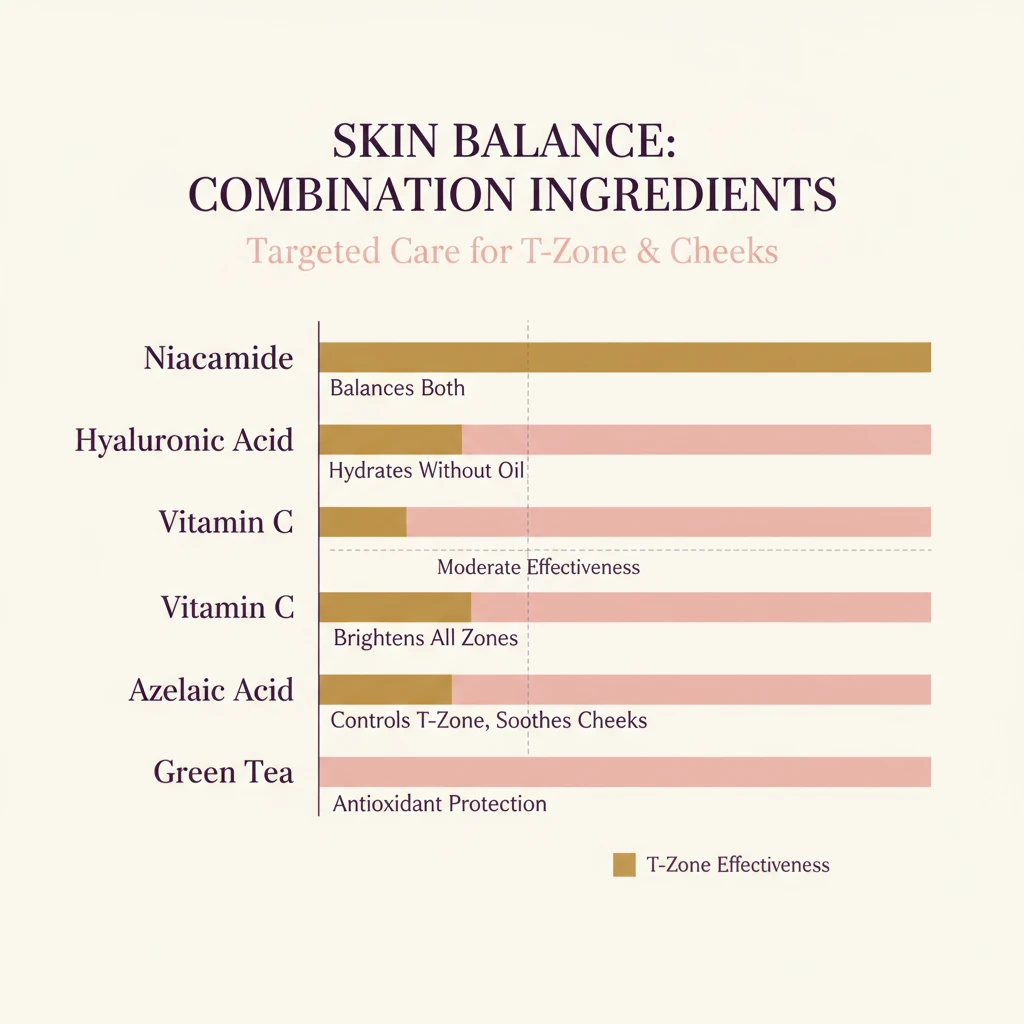
Not all actives are created equal, and combination skin responds best to ingredients that bring balance rather than extremes. These five ingredients have robust clinical evidence supporting their efficacy and are uniquely suited to the dual nature of combination complexions.
1. Niacinamide (Vitamin B3)
Why it works for combination skin: Niacinamide is perhaps the single most versatile ingredient for combination complexions. At concentrations of 2 to 5 percent, it has been clinically shown to reduce sebum production in oily zones by up to 23 percent over four weeks, while simultaneously strengthening the ceramide barrier in dry areas. It also inhibits the transfer of melanosomes to keratinocytes, which means it helps even out skin tone—a common concern when different zones develop slightly different pigmentation.
Additional benefits: Pore-refining, redness reduction, improved skin elasticity. It is well-tolerated by virtually all skin types and pairs beautifully with nearly every other active.
2. Hyaluronic Acid
Why it works for combination skin: As a humectant that draws water from the environment and deeper skin layers to the surface, hyaluronic acid provides lightweight, non-comedogenic hydration that satisfies both oily and dry zones. It does not add oil, does not clog pores, and does not leave a heavy residue. Multi-molecular weight formulations ensure hydration at every level of the epidermis.
Additional benefits: Plumping effect that softens the appearance of fine lines, enhanced absorption of subsequent products, improved skin suppleness. Apply to damp skin for optimal performance.
3. Vitamin C (L-Ascorbic Acid)
Why it works for combination skin: Beyond its well-documented antioxidant and brightening properties, vitamin C supports collagen production and helps protect against the oxidative damage that can worsen both oiliness (through inflammation) and dryness (through barrier disruption). It creates a more uniform, radiant complexion across all zones.
Additional benefits: Photoprotection enhancement (especially when paired with vitamin E and ferulic acid), reduction of post-inflammatory hyperpigmentation, overall luminosity. Use in the morning for maximum environmental protection.
4. Azelaic Acid
Why it works for combination skin: Azelaic acid (15 to 20 percent in prescription formulations, 10 percent or less over the counter) is a gentle yet effective multitasker. It normalizes keratinization (the process by which skin cells shed), which helps prevent clogged pores in the T-zone. Simultaneously, it inhibits tyrosinase to brighten uneven tone and has anti-inflammatory properties that calm both acne-prone and sensitive areas.
Additional benefits: Antimicrobial action against acne-causing bacteria, safe during pregnancy (unlike retinoids), minimal irritation potential. It is one of the few actives that can be used across the entire face regardless of zone differences.
5. Jojoba Oil
Why it works for combination skin: Technically a liquid wax ester rather than a true oil, jojoba oil has a molecular structure remarkably similar to human sebum. When applied to oily skin, it sends a signal to sebaceous glands that sufficient lipids are present, helping to regulate overproduction. On dry skin, it provides gentle emollient nourishment without heaviness. This dual-action makes it one of nature’s most intelligent ingredients for combination complexions.
Additional benefits: Non-comedogenic (rated 2 on the comedogenicity scale), rich in vitamins A, D, and E, anti-inflammatory properties. Use a few drops mixed into your night cream, or apply directly to drier areas as a targeted treatment.
Seasonal Adjustments: Adapting Your Ritual Through the Year
Combination skin is dynamic, shifting its behavior with the seasons. An effective ritual is one that adapts gracefully to these changes rather than remaining rigid year-round.
Summer Adjustments (Warm, Humid Months)
- Swap your gel-cream moisturizer for an even lighter gel formula on the T-zone. Your oily zones will produce more sebum in humidity, and a lightweight gel prevents excess shine without compromising hydration.
- Consider a mattifying SPF for the T-zone while using your regular lightweight sunscreen on the cheeks. Some formulations contain silica microspheres that absorb oil throughout the day.
- Increase BHA frequency to three times per week on the T-zone if congestion worsens. Sweat and increased sebum production can lead to more frequent breakouts in warmer months.
- Hydrating mists throughout the day provide a moisture boost for dry zones without adding oiliness. Keep a rose water or hyaluronic acid mist at your desk for midday refreshment.
- Reduce heavy overnight masks and opt for lightweight sleeping masks or simple hyaluronic acid serum as your final PM step on hot nights.
Winter Adjustments (Cold, Dry Months)
- Layer a richer cream on dry zones (cheeks, jawline, and around the mouth) while maintaining your lightweight gel-cream on the T-zone. This zone-specific approach prevents the T-zone from becoming congested while ensuring dry areas receive adequate nourishment.
- Add a facial oil to your evening routine—specifically on the cheeks and any areas showing signs of dryness or flaking. Jojoba, rosehip, or marula oil are excellent choices. Apply after serum but before night cream to seal in moisture.
- Increase multi-masking frequency to twice per week. Cold air and indoor heating can dramatically accelerate transepidermal water loss, particularly on drier zones.
- Switch to a cream-based cleanser for the evening if your usual gel formula feels stripping in winter air. Keep the gel for morning, when a lighter touch is sufficient.
- Invest in a humidifier for your bedroom. Maintaining ambient humidity between 40 and 60 percent supports your skin’s natural barrier function overnight and reduces the disparity between oily and dry zones.
Transitional Seasons (Spring and Autumn)
These in-between months often catch combination skin off guard. Pay close attention to how each zone responds to changing temperatures and humidity, and adjust product textures gradually rather than making abrupt switches. A good rule: when you notice your cheeks feeling tighter or your T-zone producing more oil than usual, it is time to shift your seasonal protocol.
A Final Note on the Philosophy of Balance
Combination skin is not a problem to solve. It is a reflection of the beautiful complexity of human biology—a reminder that skin is a living, responsive organ that deserves nuance rather than a one-size-fits-all approach. The multi-zone ritual outlined in this guide is not about achieving perfection; it is about cultivating a practice of attentiveness, consistency, and respect for your skin’s own wisdom.
When you honor the differences between your T-zone and your cheeks, when you choose ingredients with intention and apply them with care, you are not merely performing a routine. You are engaging in a daily act of self-reverence. And that, perhaps, is the most transformative ingredient of all.
Reveal your most luminous complexion—one balanced, beautiful zone at a time.
Timeless Beauty, Refined.
Download Your Complete Combination Skin Ritual Guide
Save this ritual as a beautifully designed PDF to reference every morning and evening.