By Dr. Judith Mendez, M.D. | Board-Certified Dermatologist
If your skin flushes at the slightest provocation, stings when you apply a new product, or seems perpetually caught between calm and crisis, you are not alone. Sensitive and reactive skin is one of the most common dermatological concerns worldwide, affecting an estimated 60 to 70 percent of women and 50 to 60 percent of men. Yet it remains one of the most misunderstood.
The truth is this: sensitive skin is not a flaw to be corrected. It is a signal from your body, a sophisticated communication system telling you precisely what it needs. And when you learn to listen, to build a ritual rooted in gentleness, science, and intention, the result is nothing short of transformative. You can reveal your most luminous complexion without ever compromising your comfort.
This guide will walk you through everything: the science behind sensitivity, a complete morning and evening ritual, a weekly treatment calendar, the ingredients your skin will love, and the ones it will thank you for avoiding. Whether your sensitivity is genetic or the result of a damaged barrier, this is your path back to calm, resilient, radiant skin.
Understanding Sensitive and Reactive Skin: The Science of Comfort
Sensitized vs. Truly Sensitive: An Important Distinction
Before we build your ritual, it is essential to understand the difference between sensitized skin and truly sensitive skin, because the distinction shapes your entire approach.
Truly sensitive skin is a genetic predisposition. If you have always reacted easily to products, weather changes, or stress, if your family members share similar tendencies, your sensitivity is likely intrinsic. Conditions like rosacea, eczema, and contact dermatitis often fall into this category. Your skin barrier is constitutionally thinner, your nerve endings more responsive, and your inflammatory pathways more readily activated.
Sensitized skin, on the other hand, is an acquired state. It develops when previously resilient skin has been compromised by external aggressors: over-exfoliation, harsh actives used too frequently, environmental pollution, prolonged stress, or an impaired moisture barrier. The good news is that sensitized skin can be fully restored with the right approach. The even better news is that the ritual for both conditions is remarkably similar: gentle, barrier-focused, and deeply nourishing.
What Happens at the Cellular Level
Sensitive and reactive skin involves three interconnected biological processes:
1. A Compromised Skin Barrier. Your stratum corneum, the outermost layer of skin, functions like a brick-and-mortar wall. The “bricks” are corneocytes (dead skin cells), and the “mortar” is a precise blend of ceramides, cholesterol, and free fatty acids. In sensitive skin, this mortar is insufficient. The barrier becomes porous, allowing irritants and allergens to penetrate while moisture escapes, a process called transepidermal water loss (TEWL). The result is skin that is simultaneously dry, irritated, and reactive.
2. Heightened Sensory Nerve Endings. Research published in the British Journal of Dermatology has demonstrated that individuals with sensitive skin have a higher density of nerve fibers in the upper dermis, particularly C-fibers responsible for pain and itch perception. These nerve endings release neuropeptides like Substance P and calcitonin gene-related peptide (CGRP), which amplify the sensation of stinging, burning, and tightness even when no visible inflammation is present.
3. An Overactive Inflammatory Cascade. When irritants breach the compromised barrier, keratinocytes (the predominant cells in the epidermis) release pro-inflammatory cytokines, including interleukin-1 alpha (IL-1α), tumor necrosis factor alpha (TNF-α), and interleukin-8 (IL-8). This triggers an inflammatory cascade that manifests as redness, swelling, and heat. In reactive skin, this cascade is triggered more easily and resolves more slowly than in resilient skin types.
How to Identify Sensitive and Reactive Skin
You likely have sensitive or reactive skin if you experience two or more of the following:
- Persistent or episodic redness, particularly across the cheeks, nose, and chin
- Stinging, burning, or tingling when applying skincare products
- Skin that reacts to temperature changes, wind, or humidity shifts
- Visible broken capillaries or a tendency toward rosacea
- Dryness and flaking that coexist with occasional breakouts
- A history of contact dermatitis or eczema
- Products that once worked well now causing irritation
Common Triggers to Avoid
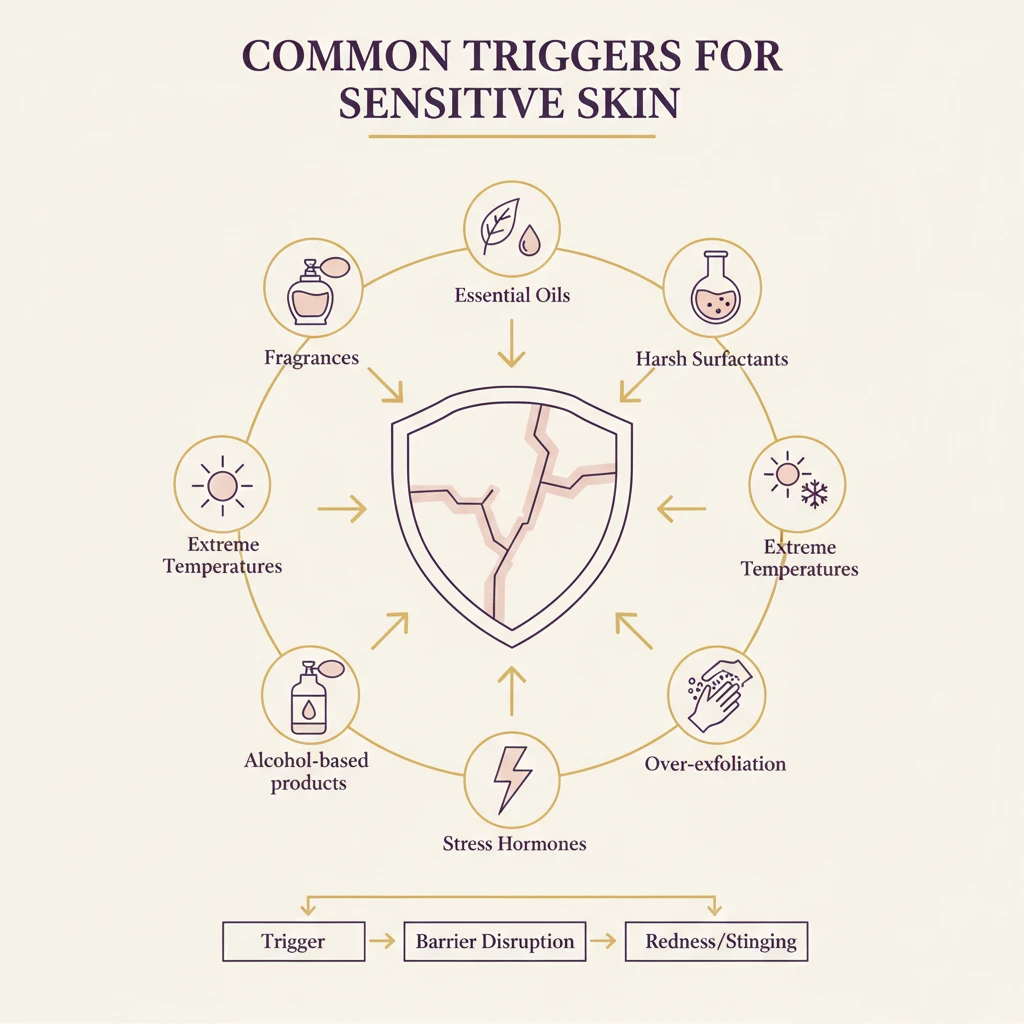
Knowledge is your most powerful tool. These are the most frequently documented triggers for sensitive and reactive skin:
- Fragrance (both synthetic and natural): The single most common cause of contact dermatitis in skincare. This includes essential oils, which, despite their natural origin, contain potent allergens like linalool, limonene, and geraniol.
- Drying alcohols (alcohol denat, SD alcohol, isopropyl alcohol): These strip the barrier and increase TEWL. Note that fatty alcohols like cetyl and cetearyl alcohol are gentle and actually beneficial.
- Essential oils: Lavender, tea tree, peppermint, and citrus oils are particularly problematic for reactive skin, despite their popularity in “clean beauty” formulations.
- Over-exfoliation: AHA and BHA acids used too frequently or at too-high concentrations are a leading cause of sensitized skin.
- Extreme temperatures: Very hot showers, saunas, and cold wind all compromise barrier integrity.
- Stress and sleep deprivation: Cortisol elevation increases inflammatory cytokine production and impairs barrier repair.
- Chemical sunscreen filters: Oxybenzone, avobenzone, and octinoxate can trigger reactions. Mineral filters (zinc oxide, titanium dioxide) sit on the skin surface and are far better tolerated.
Your Morning Ritual: Calm, Protect, and Glow
The morning ritual for sensitive skin is about two things: maintaining the calm your skin achieved overnight and building a protective shield against the day ahead. Every step should feel like a gesture of care, never a source of stress. If any product causes even mild tingling, set it aside. Your skin is communicating. Listen.
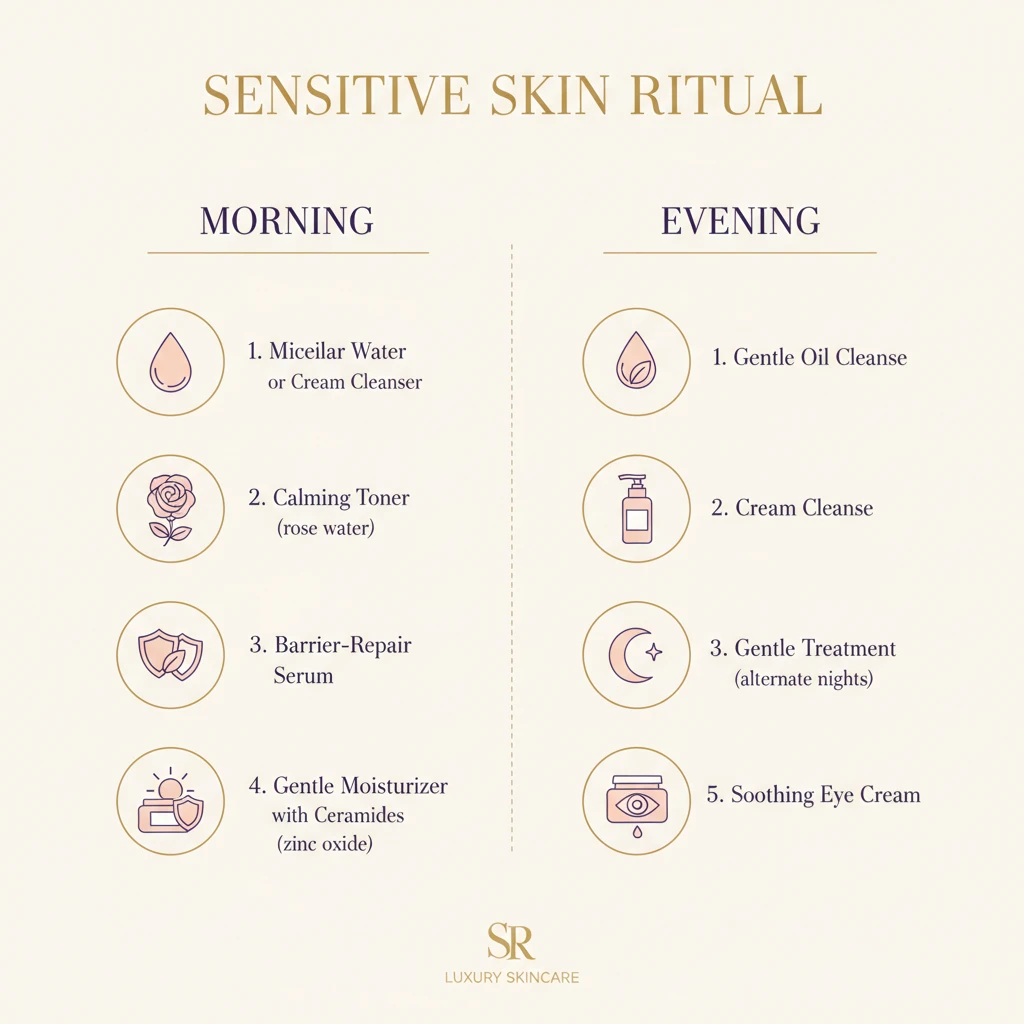
Step 1: Micellar Water or Ultra-Gentle Cream Cleanser
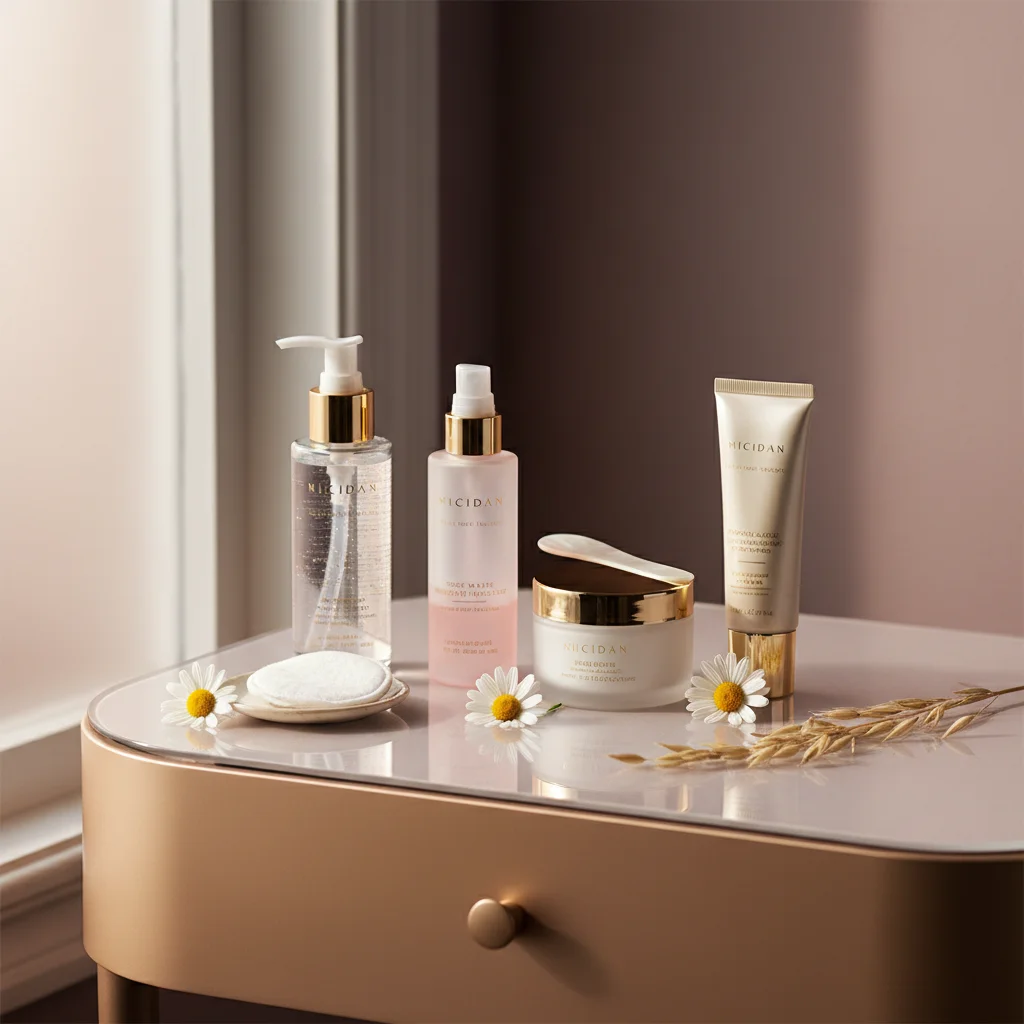
Sensitive skin rarely needs aggressive cleansing in the morning. Overnight, your skin has not accumulated environmental debris; it has been busy repairing itself. A micellar water, which uses micelles (tiny oil molecules suspended in soft water) to gently lift away overnight sebum, is ideal. Simply saturate a soft cotton pad and sweep across the face. No rinsing required.
Alternatively, a fragrance-free cream cleanser with a milky texture can be massaged in with fingertips and rinsed with lukewarm (never hot) water. Look for formulas containing glycerin, squalane, or ceramides. Avoid any cleanser that foams aggressively, as the surfactants responsible for that foam are often too stripping for reactive skin.
Step 2: Calming Toner or Mist
A hydrating mist serves a dual purpose: it replenishes moisture after cleansing and delivers calming actives directly to the skin. Rose water is a time-honored choice, with research supporting its anti-inflammatory and antioxidant properties. Centella asiatica (cica) hydrosols are another excellent option, providing the soothing madecassoside and asiaticoside compounds that accelerate barrier repair.
Hold the mist six to eight inches from your face, close your eyes, and spray in a gentle arc. Allow it to settle onto the skin for thirty seconds before proceeding. This moment of pause is part of the ritual: a breath, an intention, a small act of reverence for yourself.
We love the PAAVANI Rose Water Facial Mist for this step: organic, single-ingredient, and deeply calming.
Step 3: Centella or Aloe-Based Serum
This is where targeted treatment begins. For sensitive skin, the goal is not aggressive correction but gentle fortification. A serum built around centella asiatica (cica) delivers four key compounds: madecassoside, asiaticoside, madecassic acid, and asiatic acid. Together, these stimulate collagen synthesis, reduce inflammation, and strengthen the barrier without irritation.
If cica serums are unavailable, an aloe vera-based serum with added hyaluronic acid provides excellent hydration and soothing. Apply three to four drops to clean, slightly damp skin and press gently with your palms. Never rub or drag.
Step 4: Gentle Eye Cream
The periorbital area is the thinnest skin on the body, roughly 0.5 millimeters compared to 2 millimeters elsewhere on the face. For sensitive skin, this area demands the most delicate formulations. Choose an eye cream free of retinol, vitamin C, and fragrance. Peptides, caffeine (for puffiness), and ceramides are the safest actives for this zone.
Apply a pearl-sized amount using your ring finger (it exerts the least pressure) in a gentle tapping motion along the orbital bone. Never drag or pull.
Step 5: Barrier-Repair Moisturizer
This is the cornerstone of your sensitive skin ritual. Your moisturizer must do more than hydrate; it must actively rebuild the compromised barrier. The gold standard formulation mimics the skin’s natural lipid structure: a 3:1:1 ratio of ceramides, cholesterol, and free fatty acids.
Look for products that also contain niacinamide (vitamin B3), which strengthens barrier function and reduces redness, and panthenol (vitamin B5), which accelerates healing and provides deep hydration. Apply a generous layer and allow sixty seconds for absorption before sunscreen.
Step 6: Mineral SPF 30+ (Non-Negotiable)
Sun protection is critical for all skin types, but for sensitive and reactive skin, the choice of sunscreen is paramount. Mineral sunscreens containing zinc oxide and titanium dioxide are the only recommended option. These physical filters sit on the skin surface, reflecting UV rays rather than absorbing them. They do not generate the heat or chemical reactions that organic (chemical) filters do, making them inherently less irritating.
Choose a formula rated SPF 30 or higher with broad-spectrum protection. Tinted mineral sunscreens are an excellent option, as the iron oxides in the tint provide additional protection against visible light and blue light, both of which can trigger hyperpigmentation and inflammation in sensitive skin.
Apply as the final step of your morning ritual, and reapply every two hours if spending time outdoors.
Your Evening Ritual: Repair, Restore, and Renew
The evening is when your skin transitions from defense to repair. Cellular turnover peaks between 11 PM and 4 AM, and your barrier repair mechanisms are most active during sleep. Your evening ritual should support this natural regeneration by removing the day’s accumulation, delivering calming and reparative actives, and sealing everything in with a rich protective layer.
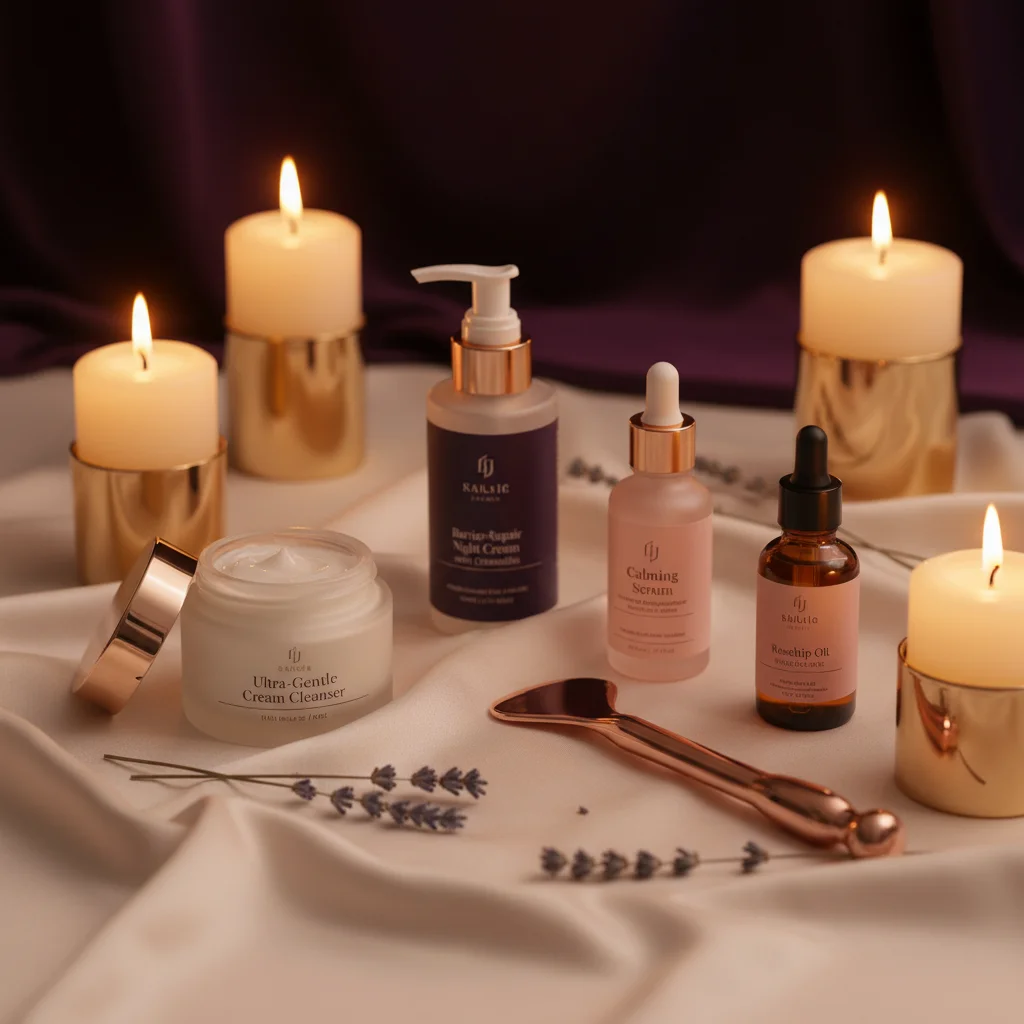
Step 1: Micellar Water or Gentle Oil Cleanse
Begin by dissolving sunscreen, makeup, and environmental pollutants with an oil-based cleanser or micellar water. Oil cleansing works on the principle that like dissolves like: the oils in the cleanser bind to the oils in your sunscreen and sebum, lifting them away without disrupting the barrier.
Choose a fragrance-free cleansing oil or balm made with jojoba oil, squalane, or sunflower seed oil. Massage gently onto dry skin for sixty seconds, then emulsify with warm water and rinse. For micellar water, simply saturate a cotton pad and sweep until no residue transfers.
Step 2: Ultra-Gentle Cream Cleanse
Follow with a cream cleanser to remove any remaining residue. This double-cleanse method is essential in the evening because mineral sunscreen, being a physical filter, requires thorough removal.
However, if your skin is particularly reactive on a given evening, if you experienced a flare during the day or the skin feels raw, skip this step entirely. One cleanse is sufficient. Forcing a second cleanse on already-compromised skin does more harm than good. Flexibility and responsiveness to your skin’s daily needs are hallmarks of an intelligent ritual.
Step 3: Gentle Enzyme Exfoliant (Once Per Week Maximum)
Exfoliation is where sensitive skin types must exercise the most restraint. Mechanical scrubs are too abrasive. Glycolic and salicylic acids, even at low concentrations, can be too aggressive if used frequently. Instead, turn to polyhydroxy acids (PHAs) like gluconolactone and lactobionic acid, or fruit enzymes from papaya (papain) and pineapple (bromelain).
PHAs have a larger molecular size than AHAs, which means they penetrate more slowly and cause less irritation while still providing effective exfoliation. Fruit enzymes work by dissolving the protein bonds between dead skin cells rather than chemically peeling them, a gentler mechanism of action.
Apply your chosen exfoliant once per week only, on a designated evening (we recommend Thursday). Leave on for the recommended time (usually five to ten minutes), then rinse with cool water. If any tingling occurs, rinse immediately. More is not better. Consistency at a gentle pace always outperforms intensity.
Step 4: Calming Treatment Serum
Your evening serum is your most active treatment step. For sensitive skin, two ingredients stand out:
Azelaic acid (10 to 15 percent) is a remarkable multitasker that is exceptionally well tolerated by reactive skin. It reduces redness by inhibiting reactive oxygen species, addresses hyperpigmentation by suppressing tyrosinase activity, and even has mild antibacterial properties. Unlike retinol or vitamin C, it rarely causes irritation.
Centella asiatica extract continues to be your ally in the evening, promoting collagen synthesis and calming inflammation accumulated during the day.
Apply three to four drops and press gently into the skin. Allow two minutes for absorption before the next step.
Step 5: Eye Cream
Repeat your morning eye cream application, or use a slightly richer formulation for overnight repair. Ingredients like peptides, shea butter, and squalane provide deep nourishment while you sleep. The same gentle tapping technique applies.
Step 6: Rich Barrier-Repair Night Cream
Your night cream should be richer and more occlusive than your morning moisturizer. While your AM product focuses on protection and lightweight comfort under sunscreen, your PM cream prioritizes deep repair.
Look for formulations containing ceramides, shea butter, squalane, and cholesterol. Occlusive ingredients like petrolatum (pharmaceutical grade), dimethicone, or beeswax create a protective seal that reduces TEWL by up to 98 percent, allowing all the actives beneath to work more effectively throughout the night.
Apply generously and massage in gentle upward strokes. Your skin should feel cushioned, cocooned, and deeply comfortable.
Step 7: Lip Treatment
The lips lack sebaceous glands and have an exceptionally thin stratum corneum, making them among the most vulnerable areas of the face. A dedicated lip treatment prevents overnight dryness and cracking.
Choose a lip balm or overnight mask containing lanolin, shea butter, ceramides, or squalane. Avoid anything with menthol, camphor, or phenol, which create a tingling sensation that signals irritation, not healing. Apply a generous layer as the final step of your evening ritual.
Your Weekly Treatment Schedule
Consistency builds resilience. This weekly calendar provides structure while allowing your skin regular periods of rest. Adjust based on your skin’s daily feedback, and never hesitate to simplify if your skin signals distress.
| Day | Morning Ritual | Evening Ritual | Special Treatment |
|---|---|---|---|
| Monday | Full 6-step AM routine | Full 7-step PM routine | Calming sheet mask or cream mask (centella, aloe, or oat-based) after Step 4 |
| Tuesday | Full 6-step AM routine | Full 7-step PM routine | None. Allow Monday’s mask to continue working. |
| Wednesday | Full 6-step AM routine | Full 7-step PM routine | Add 2-3 drops of facial oil (rosehip or jojoba) mixed into night cream for extra barrier support |
| Thursday | Full 6-step AM routine | Full 7-step PM routine | Gentle enzyme exfoliation (Step 3 in PM routine). This is the ONLY exfoliation day. |
| Friday | Full 6-step AM routine | Full 7-step PM routine | None. Allow skin to recover from Thursday’s exfoliation. |
| Saturday | Full 6-step AM routine | Full 7-step PM routine | Calming sheet mask + kansa wand facial massage (cooling, gentle pressure only) |
| Sunday | Minimal: Micellar water + moisturizer + SPF | Minimal: Gentle cleanse + night cream | Rest day. Let your skin breathe. Minimal products, maximum recovery. |
Note on the kansa wand: This traditional Ayurvedic tool, made from a blend of copper, tin, and zinc, has natural cooling properties that help calm reactive skin. Use only with gentle, sweeping strokes and no downward pressure. Store it in the refrigerator for an enhanced cooling effect.
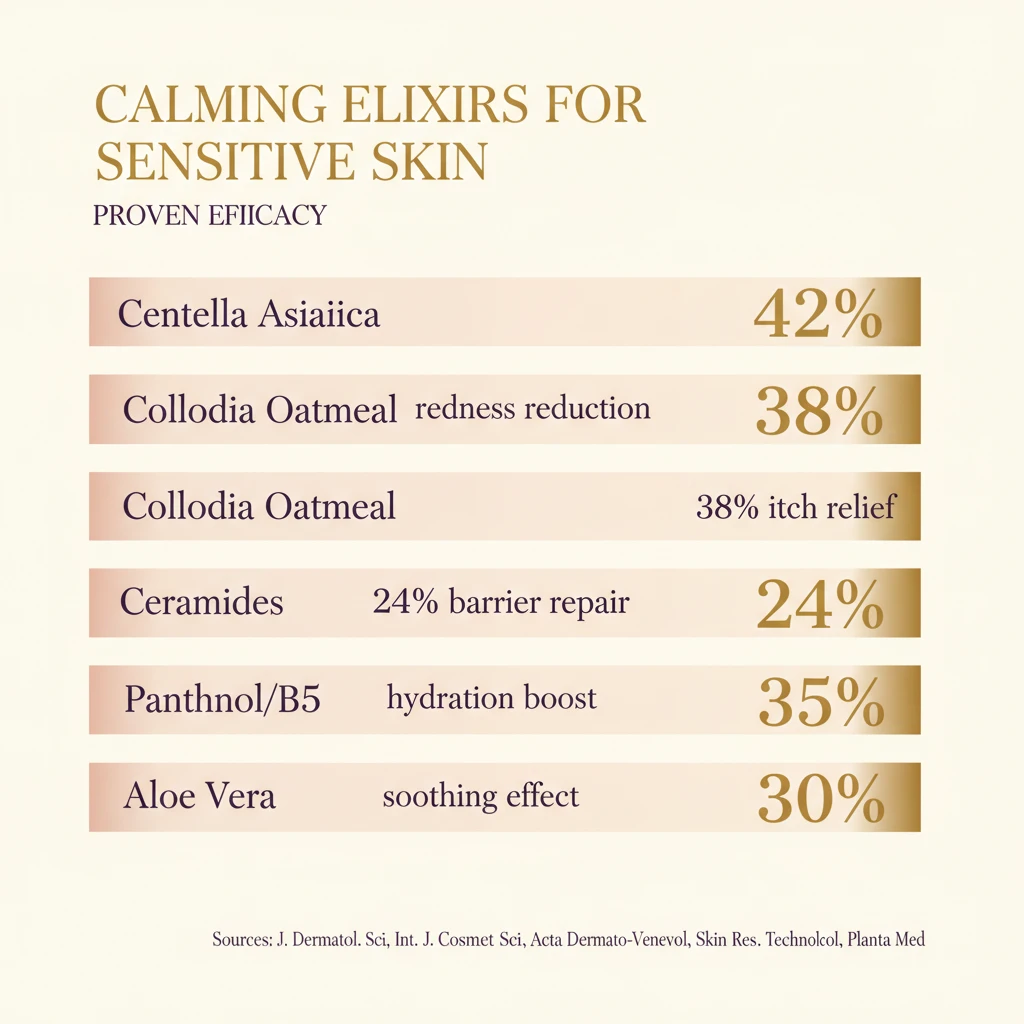
Ingredient Spotlight: Five Allies for Sensitive Skin
Not all active ingredients are aggressive. These five have been extensively studied and consistently demonstrated efficacy without compromising the barrier. They are the foundation of every product you choose for your sensitive skin ritual.
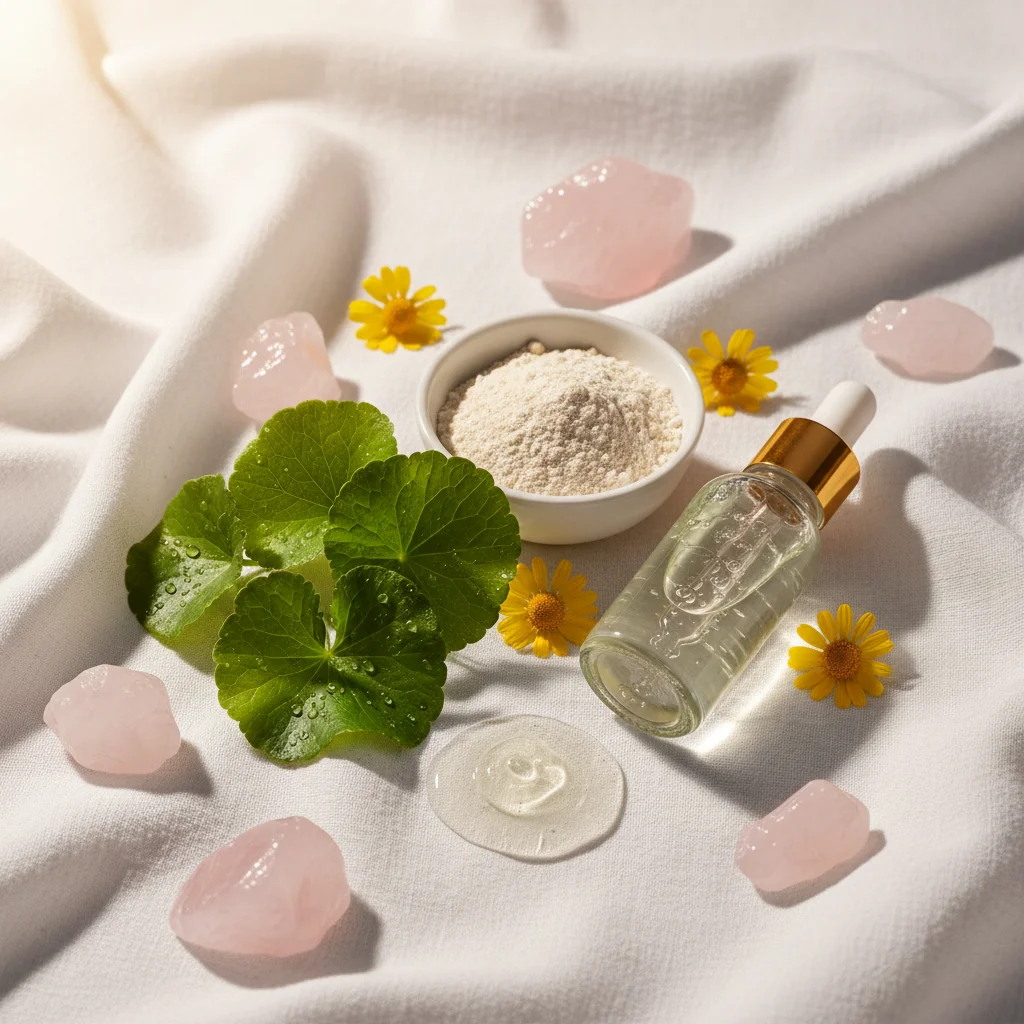
1. Centella Asiatica (Cica)
What it does: Centella asiatica has been used in traditional medicine for thousands of years, and modern dermatological research has validated its remarkable properties. Its four key active compounds, madecassoside, asiaticoside, madecassic acid, and asiatic acid, work synergistically to stimulate collagen types I and III, accelerate wound healing, reduce inflammation by inhibiting pro-inflammatory cytokines, and strengthen the skin barrier.
Clinical evidence: A 2020 study in the Journal of Clinical Medicine found that topical centella asiatica significantly improved skin hydration, reduced TEWL, and decreased erythema (redness) in subjects with sensitive skin after just four weeks of use.
How to use it: Look for it in serums, moisturizers, and sheet masks. Effective at concentrations as low as 0.1 percent, with optimal results at 1 to 5 percent. Safe for twice-daily use.
2. Ceramides
What they do: Ceramides are lipid molecules that constitute approximately 50 percent of the skin barrier’s mortar. In sensitive and eczema-prone skin, ceramide levels are measurably lower than in healthy skin. Topical application of ceramides directly replenishes what is missing, restoring barrier integrity and reducing TEWL.
Clinical evidence: A landmark study published in the Journal of the American Academy of Dermatology demonstrated that a ceramide-dominant moisturizer was as effective as a mid-potency steroid cream for treating eczema, with none of the side effects associated with long-term steroid use.
How to use them: Prioritize products listing ceramide NP, ceramide AP, or ceramide EOP in the first half of the ingredient list. Most effective when combined with cholesterol and fatty acids in the physiological 3:1:1 ratio. Use morning and evening.
3. Aloe Vera
What it does: Aloe vera contains over 75 active compounds, including acemannan (a polysaccharide with anti-inflammatory properties), salicylic acid (in trace amounts, providing gentle exfoliation), enzymes (bradykinase, which reduces inflammation), and vitamins A, C, and E. It soothes, cools, hydrates, and accelerates epithelial cell regeneration.
Clinical evidence: Research in the Indian Journal of Dermatology confirmed aloe vera’s ability to reduce erythema, improve skin hydration, and accelerate wound healing. Its cooling sensation provides immediate comfort for reactive, flushed skin.
How to use it: Apply pure aloe vera gel as a soothing treatment during flares, or choose serums and moisturizers that feature it as a primary ingredient. Store in the refrigerator for enhanced cooling effect.
4. Colloidal Oatmeal
What it does: Colloidal oatmeal is one of only a handful of ingredients recognized by the FDA as a skin protectant. It contains avenanthramides (polyphenols unique to oats) that inhibit NF-κB activation, a key driver of inflammatory gene expression. It also contains beta-glucans that form a protective film on the skin, reducing TEWL and providing a soothing, anti-itch effect.
Clinical evidence: A study in the Journal of Drugs in Dermatology demonstrated that colloidal oatmeal significantly reduced skin dryness, scaling, roughness, and itch intensity within two weeks. It has been safely used in sensitive skin formulations for over 60 years.
How to use it: Found in cleansers, moisturizers, masks, and bath products. Particularly effective in cream masks for calming acute flares. Safe for daily use, including on children and during pregnancy.
5. Panthenol (Vitamin B5)
What it does: Panthenol, the provitamin form of vitamin B5, is a humectant that attracts and retains moisture in the epidermis. Once absorbed, it converts to pantothenic acid, which is essential for lipid synthesis (barrier repair), cellular energy production, and wound healing. It also has a documented anti-inflammatory effect, reducing itching and erythema.
Clinical evidence: Research published in Skin Pharmacology and Physiology showed that panthenol at concentrations of 1 to 5 percent significantly improved skin barrier function, increased stratum corneum hydration, and reduced roughness and inflammation.
How to use it: One of the safest and most universally tolerated actives in skincare. Look for it in serums, moisturizers, and lip treatments. Effective at 1 percent; optimal at 5 percent. Use morning and evening.
Seasonal Adjustments: Adapting Your Ritual Through the Year
Sensitive skin does not exist in a vacuum. The changing seasons bring shifting humidity, temperature, UV intensity, and wind exposure, all of which require thoughtful adjustments to your ritual. The goal is always the same: maintain barrier integrity and minimize triggers.
Summer Adjustments (May through September)
- Sunscreen: Mineral only, always. Consider a lighter-weight mineral SPF formulation or a tinted mineral sunscreen that doubles as a light foundation. Reapply every 90 minutes during outdoor activities.
- Moisturizer: Switch to a lighter barrier cream or gel-cream. Humidity provides natural moisture, so a heavy occlusive can feel suffocating and may contribute to miliaria (heat rash).
- Calming mists: Keep a thermal water or rose water mist in the refrigerator and spritz throughout the day over makeup. This cools the skin, reduces heat-triggered redness, and replenishes hydration lost to perspiration.
- Antioxidant support: Consider adding a gentle antioxidant serum (vitamin E, green tea extract) to combat increased UV-generated free radical damage. Avoid vitamin C if it causes tingling.
- Cleansing: You may need to double cleanse in the evening to thoroughly remove water-resistant mineral sunscreen. Be gentle. Use lukewarm water only.
Winter Adjustments (October through April)
- Richer barrier cream: Switch to a heavier moisturizer with more occlusive ingredients (shea butter, squalane, petrolatum). Indoor heating and cold outdoor air dramatically reduce humidity, increasing TEWL.
- Facial oils: Add two to three drops of rosehip, jojoba, or marula oil to your night cream every evening, not just Wednesdays. These oils provide essential fatty acids that reinforce the lipid barrier.
- Reduce exfoliation: Consider reducing enzyme exfoliation from weekly to biweekly during the coldest months. The compromised winter barrier cannot tolerate as much disruption.
- Protective balms: Apply a ceramide-rich balm to the most exposed areas (cheeks, nose, lips, hands) before going outdoors. This acts as a physical shield against wind and cold.
- Humidifier: Run a humidifier in your bedroom at 40 to 60 percent relative humidity. This single environmental change can dramatically reduce overnight TEWL and morning dryness.
- Water temperature: Resist the temptation of hot showers and baths. Hot water strips the barrier more aggressively than anything in your skincare routine. Lukewarm, always.
The Patch Testing Protocol: Your Safety Net
Every new product you introduce should undergo a patch test, no exceptions. Even products labeled “for sensitive skin” or “dermatologist-tested” can contain ingredients your unique biology reacts to. A proper patch test takes patience, but it can save you weeks of recovery from a full-face reaction.
Phase 1: Inner Forearm Test (24 to 48 Hours)
Apply a small amount of the product to the inner forearm, an area that closely mimics facial skin sensitivity. Cover with a small adhesive bandage if the product is a leave-on treatment. Check at 24 hours and again at 48 hours. Look for redness, itching, burning, bumps, or any change in skin texture. If any reaction occurs, the product is not for you. Discontinue immediately.
Phase 2: Behind-the-Ear Test (24 to 48 Hours)
If the forearm test passes, apply a small amount behind one ear (the mastoid area). This skin is thinner and more similar to facial skin in sensitivity. Again, wait 24 to 48 hours and monitor for any reaction.
Phase 3: Small Facial Area Test (72 Hours)
If both previous phases pass, apply the product to a small area of your face, ideally along the jawline or a small patch on one cheek. Use it as directed (morning or evening) for three consecutive days. If no reaction occurs after 72 hours, the product is likely safe for full-face use.
Important Patch Testing Notes
- Introduce only one new product at a time, with at least two weeks between new introductions. This allows you to clearly identify the source of any reaction.
- Test during a period of skin stability, not during a flare or after recent exfoliation.
- A reaction can be immediate (within minutes) or delayed (24 to 72 hours). Delayed reactions are common with fragrance and preservative sensitivities.
- Keep a simple skincare journal noting each product tested and the result. Over time, you will build an invaluable map of your skin’s tolerances and sensitivities.
Building Your Product Wardrobe: What to Look For
When selecting products for sensitive skin, the ingredient list is more important than the marketing claims. Here is your quick-reference checklist:
Seek out: Ceramides, centella asiatica, panthenol, colloidal oatmeal, aloe vera, squalane, niacinamide, hyaluronic acid, allantoin, bisabolol, zinc oxide (in sunscreens), shea butter, jojoba oil, and rosehip oil.
Avoid: Fragrance (parfum), essential oils, denatured alcohol, sodium lauryl sulfate (SLS), retinol (until barrier is restored), high-concentration AHAs and BHAs, chemical sunscreen filters, witch hazel, menthol, and any product with more than fifteen ingredients (simplicity is your friend).
A note on “fragrance-free” labeling: In the United States, the term “fragrance-free” is not strictly regulated. Always confirm by scanning the full ingredient list for terms like parfum, fragrance, essential oil blends, or specific essential oil names. “Unscented” is not the same as fragrance-free; unscented products may contain masking fragrances.
A Final Word: Patience as a Luxury
In a world that promises overnight transformations, the most radical act of self-care for sensitive skin is patience. Barrier repair takes a minimum of four to six weeks, and full restoration of resilient, calm, luminous skin can take three to six months of consistent, gentle care.
Do not be discouraged by this timeline. Every evening you spend nurturing your barrier, every morning you protect it with mineral SPF, every moment you choose gentleness over aggression, you are building something lasting. You are not merely treating symptoms. You are cultivating resilience at the cellular level.
Your sensitive skin is not fragile. It is intelligent, communicative, and, when given the right support, capable of the most extraordinary radiance. Trust the process. Trust your skin. And enjoy every step of the ritual.
Timeless beauty, refined.
Download Your Complete Sensitive Skin Ritual Guide
Save this ritual as a beautifully designed PDF to reference every morning and evening.